
The perfect tie length is when its tip hits your belt buckle, neither too high nor too low. This classic rule ensures a balanced and polished look for any outfit.
Ever stood in front of the mirror, tie in hand, wondering if your knot is just right? You’re not alone! Many of us have faced that moment of uncertainty. A tie that’s too short or too long can throw off your entire ensemble, making you feel less confident, no matter how sharp your shirt and jacket are. It’s a small detail, but getting it right makes a big difference in how polished and put-together you appear. Don’t worry; this guide is here to demystify the common tie-length dilemma. We’ll walk through the simple, straightforward steps to ensure your tie always hits the mark, making you look effortlessly stylish every time.
Why Tie Length Matters for Your Look
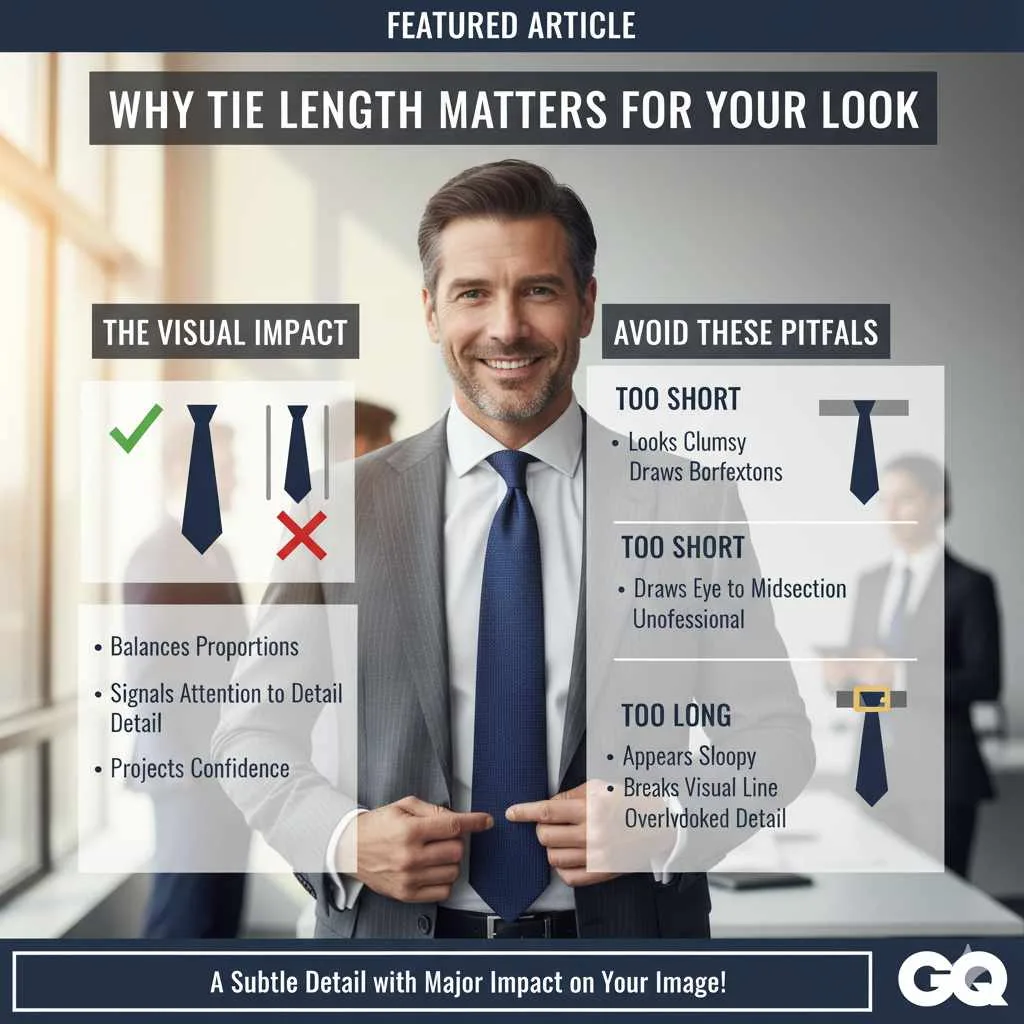
The length of your tie is more than just a measurement; it’s a subtle yet powerful element of your overall presentation. When a tie is the correct length, it creates a visual anchor that balances the proportions of your torso and outfit. It signals attention to detail and an understanding of classic style. Conversely, a tie that’s either too short, leaving a noticeable gap above your belt, or too long, draping awkwardly over your belt or even below it, can detract from your appearance. It can make your outfit look clumsy and suggest an oversight in dressing. Mastering this simple rule is a key step in building a confident and professional image.
The Golden Rule: Belt Buckle Perfection
The most widely accepted and easiest-to-follow rule for tie length is that the tip of the tie should just touch the top of your belt buckle. This applies whether you’re wearing a traditional suit, a sports coat, or even just a shirt and tie. It’s a classic guideline that has stood the test of time because it works universally.
Think of your belt buckle as your tie’s natural endpoint. When the tie perfectly meets the buckle, it creates a harmonious vertical line that draws the eye down your torso in a pleasing way. This simple visual cue helps to elongate your appearance and maintain a sense of proportion. It’s about achieving that subtle, sophisticated balance that makes an outfit look intentional and well-coordinated.
Understanding the “Why” Behind the Rule
Why is the belt buckle the ideal landmark? It relates to visual balance and proportion. Your belt buckle is typically situated at the natural waistline or slightly below, depending on your trousers. This point is a central visual anchor for your lower body and the transition between your upper and lower garments. When the tie’s tip aligns with this anchor, it creates a sense of visual completeness.
A tie that’s too short can make your torso appear longer than it is and can look like you’ve outgrown the tie. It breaks the intended flow of the outfit. On the other hand, a tie that’s too long—extending below the buckle or even reaching your crotch—can make your legs look shorter and create an untidy appearance. It disrupts the clean lines of your suit or shirt, making you look less put-together. Achieving the belt buckle sweet spot ensures that your tie contributes positively to your overall silhouette, rather than detracting from it.
Factors That Influence Tie Length
While the belt buckle rule is a fantastic starting point, a few factors can subtly influence how you achieve that perfect length. Understanding these nuances can help you fine-tune your tie-wearing game.
Your Height
This is perhaps the most obvious factor. Taller individuals will naturally have a longer torso and may need to be more mindful of their tie’s length. Shorter individuals might find that standard-length ties fit them perfectly or even lean towards being a touch long. Always check the final resting place against your belt buckle.
Trouser Rise
The rise of your trousers refers to the distance from the crotch seam to the top of the waistband. Low-rise trousers sit lower on the hips, meaning your belt buckle is naturally lower. High-rise trousers sit higher on your waist, raising your belt buckle. This directly affects where the tie’s tip will land. If you wear low-rise trousers, your tie might appear shorter relative to your overall height, and vice versa for high-rise. The belt buckle remains the consistent marker, but the trouser rise alters its vertical position.
Tie Width and Material
Wider ties can sometimes appear to be shorter due to their visual weight and the way they drape. Thicker, textured ties (like wool or knit ties) might also have a slightly different hang than smooth, silk ties. While these differences are usually minimal, they can contribute to a tie appearing to end a fraction higher or lower. Always re-check the tip against your buckle after tying.
The Knot You Choose
Different tie knots consume varying amounts of fabric. A large, bulky knot like the Eldredge or Trinity knot will use more of the tie’s length than a simple Four-in-Hand knot. This means that the same tie, when tied with a different knot, might end at a different point. If you favour larger knots, your tie might naturally end up shorter, bringing its tip closer to your buckle or even slightly above if you aren’t careful. For more information on different tie knots, exploring resources like Ties.com’s knot-tying guide can be very helpful.
How to Measure and Adjust Your Tie Length
Achieving the perfect tie length is straightforward with a little practice. Here’s a breakdown of how to do it.
- Start with the Tie Around Your Neck: Drape the tie around your neck, ensuring the wider end is on your dominant side (usually the right) and hangs about 12 inches lower than the narrow end. This is a general starting point; you’ll adjust.
- Form Your Chosen Knot: Tie your preferred knot (e.g., Four-in-Hand, Half Windsor, Windsor). As you tighten the knot, keep it snug but not overly tight.
- Assess the Length: Let the tie hang. The tip of the wide end should be resting right at the top of your belt buckle.
- Make Adjustments:
- If the tie is too long: Untie the knot slightly, reposition the wide end so it hangs a little higher before retrying the knot. Repeat until the tip is at the buckle.
- If the tie is too short: Untie the knot slightly, let the wide end hang a bit lower before retrying the knot. Repeat until it reaches the buckle.
- The Final Check: Once positioned correctly, gently slide the knot up towards your collar. The knot should be snug against your collar, and the tip of the tie should still be perfectly aligned with your belt buckle. Ensure the narrow end is tucked neatly behind the wide end using any available keeper loop.
A Visual Guide to Tie Lengths
Sometimes, seeing is believing! Let’s look at how different tie lengths appear, using the belt buckle as our reference point.
| Tie Length Scenario | Appearance | Impact on Style |
|---|---|---|
| Too Short (Above Belt Buckle) | The tip of the tie ends noticeably above the belt buckle, creating a visible gap. It might even reach the midriff. | Looks unbalanced, can make the wearer appear shorter or even child-like. Suggests a lack of attention to detail, disrupting the visual flow. |
| Just Right (At Belt Buckle) | The tip of the tie perfectly aligns with the top edge of the belt buckle. | Achieves a balanced, proportional, and polished look. This is the ideal, classic presentation that works for most occasions. |
| Too Long (Below Belt Buckle) | The tip of the tie extends past the belt buckle, resting on the belt itself, or even drooping below it. | Looks untidy and can make the lower body appear disproportionately long. It can distract from the overall outfit and signal a lack of polish. |
What About Different Types of Ties?
The belt buckle rule is primarily for traditional neckties. However, here’s how it generally applies to other popular tie styles:
Bow Ties
Bow ties are different. Self-tie bow ties are meant to be tied into a bow at the collar, so their length is adjusted by the knot itself. Pre-tied bow ties have a fixed neckband length. The goal is for the bow tie to be proportionate to your neck and face, sitting neatly centered under your collar without overhang.
Skinny Ties
Skinny ties, which are typically 3 inches wide or less at their widest point, still follow the belt buckle rule. The key difference is that both the knot and the tie itself will appear more streamlined. A skinny tie ending at the belt buckle can offer a more modern, sharp silhouette.
For example, a standard tie might be around 57-60 inches long. A skinny tie might be the same length but appear shorter due to its narrower width and how it drapes.
Longer or Shorter Ties
Some manufacturers offer ties in “long” or “short” options, catering to individuals outside the average height range. If you consistently struggle to achieve the belt buckle length with standard ties, investing in a proportionally sized tie can save you a lot of hassle. A long tie is typically over 63 inches, suitable for those well over 6’3″, while a regular tie is around 57-60 inches.
You can often find size guides on reputable menswear retailer websites, such as Brooks Brothers, which often specify tie lengths or offer guidance based on height.
Knit Ties
Knit ties, with their distinctive textured fabric and rectangular ends (rather than a traditional pointed tip), also adhere to the belt buckle rule. Because they are often made of wool or a similar yarn, they can have a different drape than silk ties. Ensure the rectangular end of the knit tie ends at the belt buckle for the most stylish appearance.
Common Mistakes to Avoid
Even with the belt buckle rule in mind, it’s easy to make a few common mistakes. Being aware of these will help you perfect your look:
- The “Long Tie” Instinct: When a tie is slightly short, the natural instinct might be to lengthen the narrow end significantly. This often results in the narrow end peeking out from behind the wide end, or the keeper loop not being able to secure it properly. Better to re-tie and adjust the drape.
- Overly Tight Knots: While a snug knot is good, an excessively tight knot can bunch up the fabric and make the tie appear shorter or distorted. Always untie and re-tie if you feel you’ve pulled the knot too tight.
- Forgetting the Waistline: If you wear your trousers very high or very low, the belt buckle position changes. Always use your actual belt buckle as the guide, not an imagined waistline.
- Not Checking After Tying: Don’t just assume it’s right. Once the knot is tied and snug, always look in the mirror to check the tip against your belt buckle.
- Ignoring Outfit Proportions: While the belt buckle is a rule of thumb, consider your overall outfit. A very wide tie might look visually shorter if it’s also very wide. Conversely, a very skinny tie might need to hit the buckle precisely to avoid looking too short due to its narrowness.
A Pro-Tip for Perfect Consistency
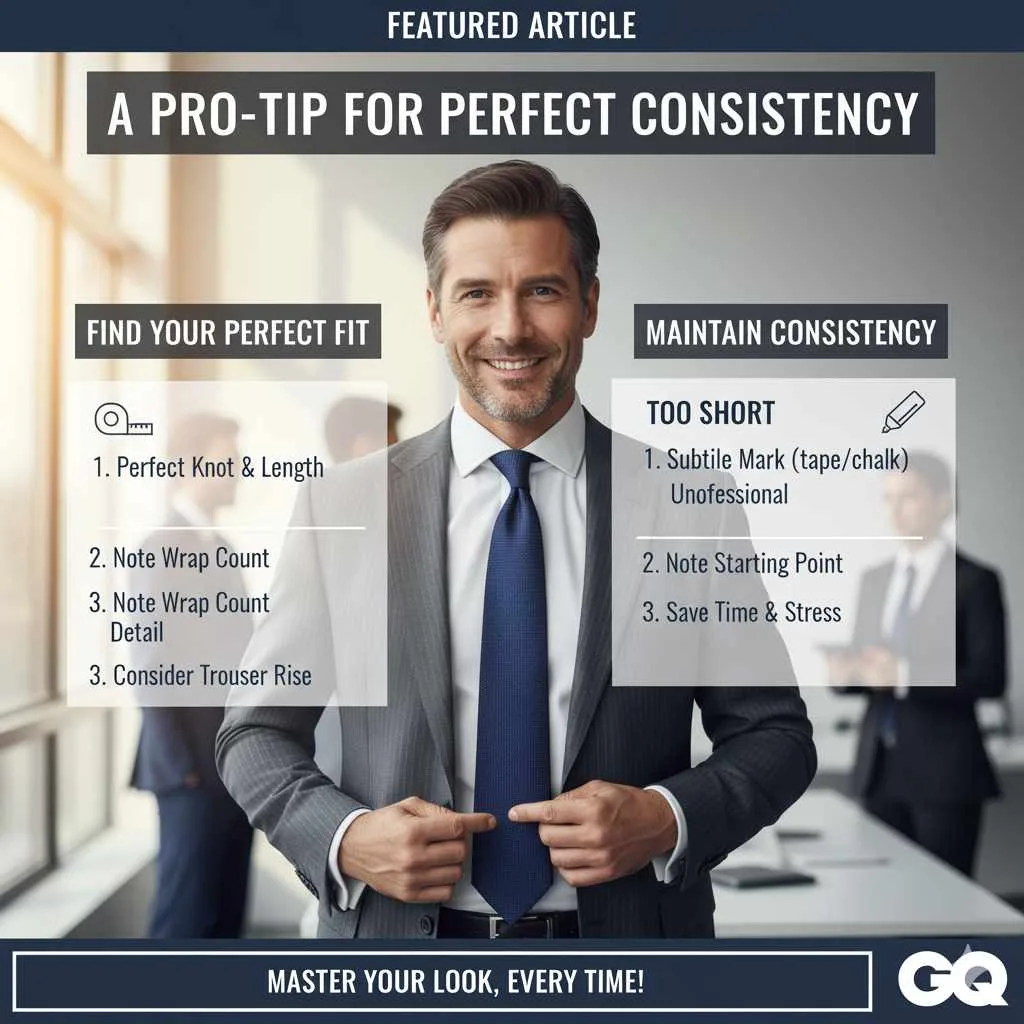
Once you’ve found the perfect knot and tie length combination for your build and your common trouser rise, take a moment to observe. You might notice that a specific number of wraps around the narrow end before pulling through the knot usually does the trick. You can even subtly mark your tie (with a tiny piece of fabric tape or chalk that won’t stain) where the wide end should begin its drape around your neck to achieve the ideal length. This little trick can save you time and guesswork on busy mornings.
FAQs about Tie Length
Q1: My tie always seems too short or too long. What am I doing wrong?
A1: You might be starting with the wrong initial drape of the wide end. Try adjusting how much lower the wide end hangs relative to the narrow end before you begin tying. If it’s too long, start with the wide end hanging less low next time. If too short, let it hang a bit lower.
Q2: Does the type of shirt collar affect how my tie should hang?
A2: Not directly the length, but the collar choice impacts the overall look. A wider collar (like a spread collar) can accommodate a wider tie and a more substantial knot, while a point collar may look best with a simpler knot and a standard-width tie. The tie’s tip should still hit the belt buckle regardless of collar style.
Q3: Is there a difference in tie length for formal events versus casual wear?
A3: The rule of thumb for length (tip at the belt buckle) applies to both. For formal events, the focus is often on the quality of the tie and the neatness of the knot. For casual settings, you might wear a knit tie or a patterned tie, but the length principle remains the same for a polished appearance.
Q4: What if standard ties are always too long, even with my belt buckle?
A4: You likely have a shorter torso or are of shorter stature. Look for “short” or “slim” length ties, which are specifically made to accommodate this. Many reputable brands offer ties in different lengths.
Q5: Can I fix a tie that is too long by tucking it into my trousers?
A5: This is generally not recommended. Tucking the tip of the tie into your trousers creates an unnatural bulge and looks unprofessional. It’s far better to re-tie the tie to the correct length or use a shorter tie.
Q6: How do I ensure the narrow end of my tie stays hidden?
A6: Most ties have a small fabric loop called a “keeper” on the back of the wide end. Thread the narrow end through this loop after you’ve tied the knot and adjusted the length. Ensure the narrow end is secured neatly behind the wide end.
For more detailed insights into men’s professional attire, resources from institutions like the Los Angeles Trade-Technical College Fashion History archive offer historical context and context on style evolution.
Conclusion
Mastering the art of tie length is a simple yet impactful way to elevate your style. By adhering to the classic guideline – the tip of your tie meeting your belt buckle – you ensure a balanced, proportional, and polished look every time. Remember to consider your own height, trouser rise, and knot choice, and don’t be afraid to adjust your tying technique until you achieve that perfect hang.
With this essential guide, you’re well-equipped to tie your ties with confidence. No more second-guessing or worrying about an off-kilter look. You’ve learned the fundamental rule, the reasons behind it, and how to apply it consistently. So, go ahead, create that crisp knot, achieve that ideal length, and step out feeling your absolute best. Your attention to this detail speaks volumes, adding that final, flawless touch to your impeccable style.