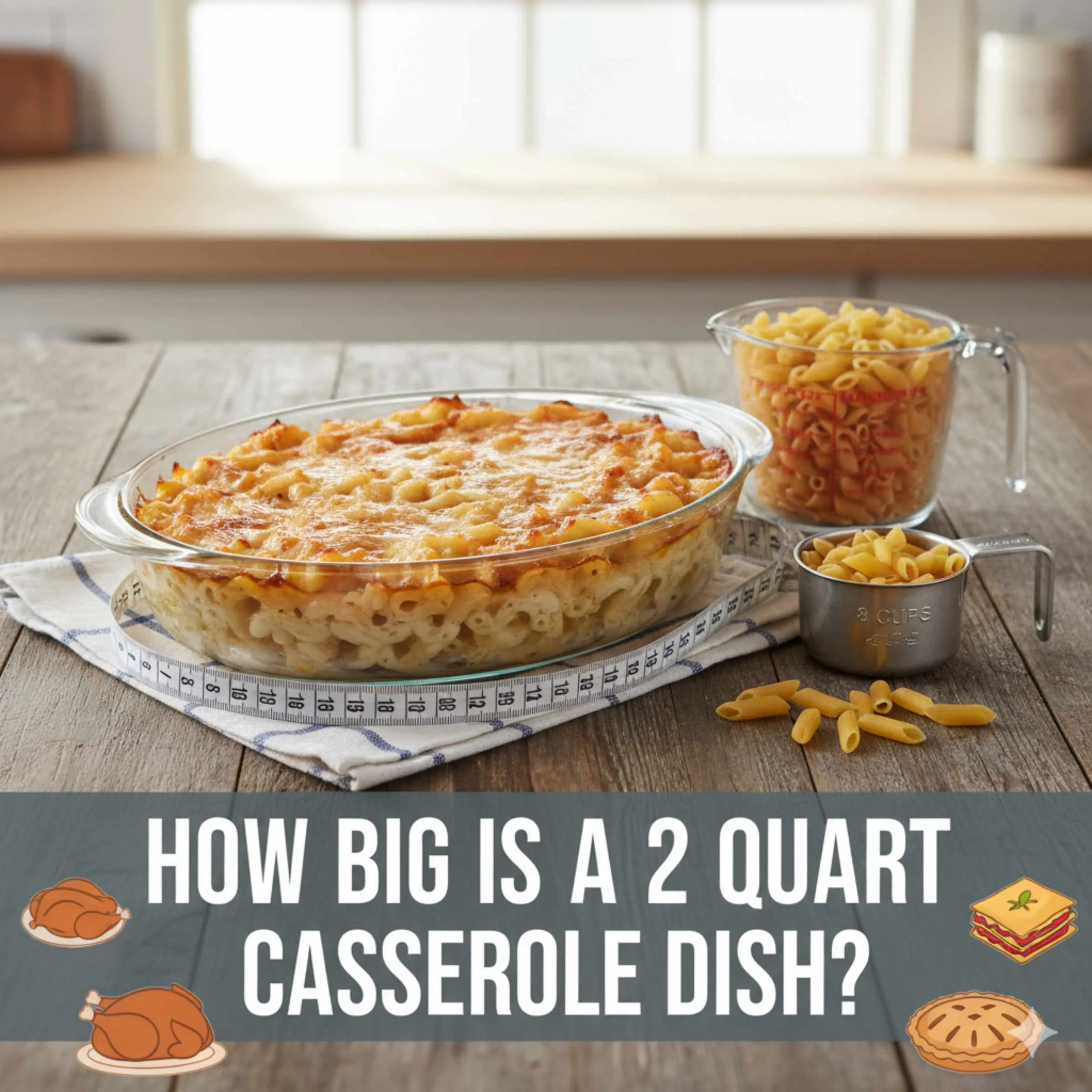
A 2-quart casserole dish is typically about 9 inches long, 7 inches wide, and 2 to 3 inches deep, fitting comfortably into standard ovens. While volume (2 quarts) is the official measure, understanding its specific dimensions in inches helps you know if it fits your counter space and recipes perfectly.
Welcome! If you’ve ever stared at a recipe that calls for a “2-quart baking dish” and felt a little lost, you are not alone. Kitchen measurements can seem tricky, especially when they mix volume (quarts) with physical size (inches). Getting the right size is key for perfect baking—too big, and your lasagna spreads too thin; too small, and you get overflow! Don’t worry. We’re going to break down exactly how big a 2-quart casserole dish is, what that means for your cooking, and how to measure what you already own. Let’s put those confusing volume numbers into clear, easy-to-understand inches so you can bake with confidence every time.
Understanding Volume vs Dimensions in Baking Dishes
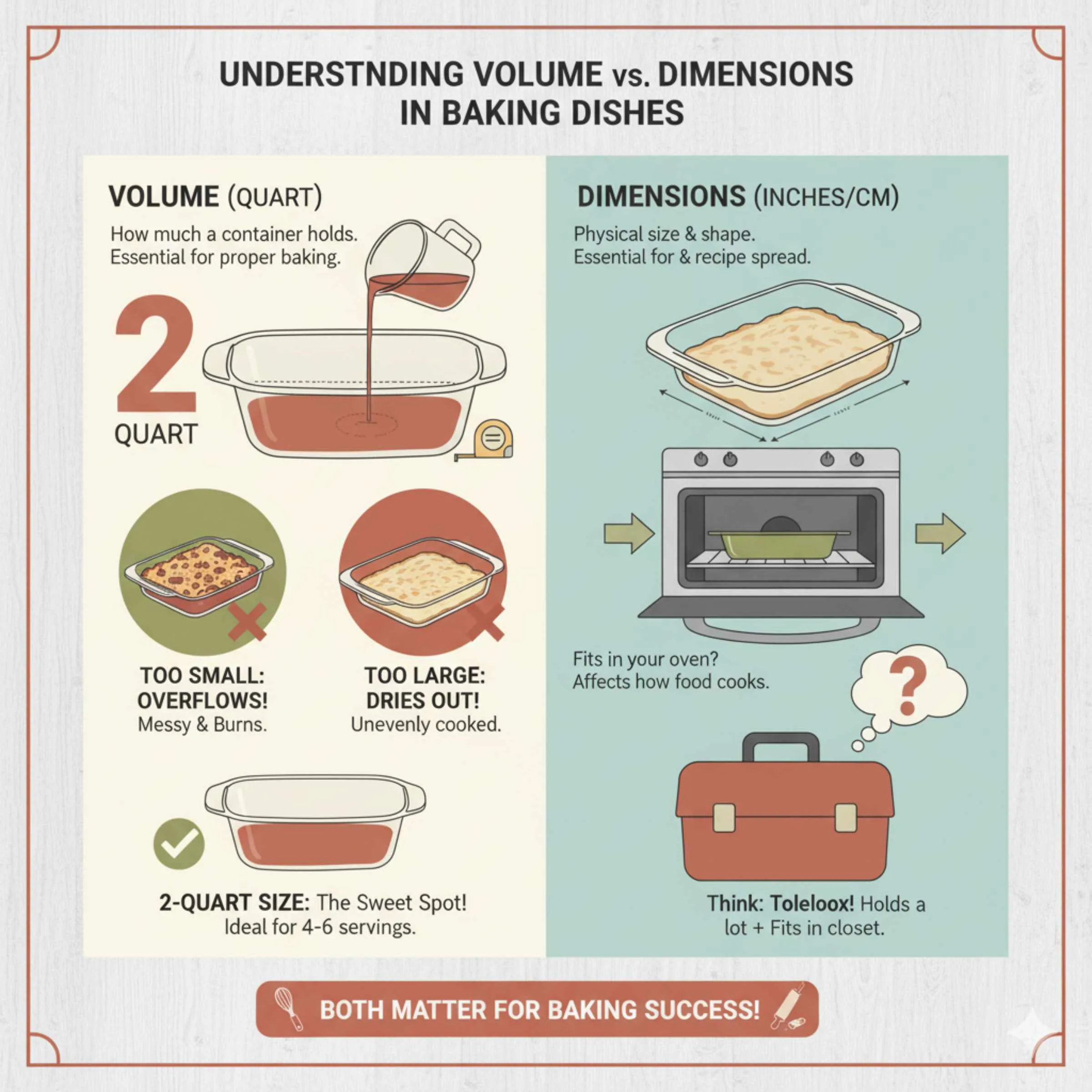
When we talk about cookware size, we often use two different terms: volume and physical dimensions. For baking, both matter equally. Think of it like buying a toolbox; you need to know how much it holds (volume) and how wide it is so it fits in your closet (dimensions).
What Does “Quart” Mean for a Casserole Dish?
A quart is a unit of volume. It tells you how much liquid—or batter, or stew—the container can hold when filled to the brim. Knowing the quart size helps ensure your recipe bakes correctly.
- Too Small: If you use a 1-quart dish for a 2-quart recipe, the batter will overflow, creating a big mess and potentially burning on your oven floor.
- Too Large: If you use a 3-quart dish for a 2-quart recipe, the food will spread out too thin. This causes it to cook faster and potentially dry out, or it might not brown nicely across the top.
For home cooks, the 2-quart size is extremely popular. It’s often right in the sweet spot for side dishes, small family meals, or recipes designed for four to six people.
The Typical Dimensions of a 2 Quart Casserole Dish
While the volume is always 2 quarts, the actual physical shape—the length, width, and depth—can vary a bit depending on the manufacturer and whether the dish is circular, square, or rectangular. However, there is a very common standard size that most people recognize.
The Standard Rectangular 2 Quart Casserole Dish
The most common 2-quart casserole dish is rectangular, similar to those often made by Pyrex or Anchor Hocking. These are fantastic because they fit side-by-side often in standard ovens and are great for layered dishes like baked ziti or green bean casserole.
| Measurement | Typical Range (Inches) | Approximate Metric Conversion |
|---|---|---|
| Length (Long Side) | 8.5 to 9.5 inches | 21.5 cm to 24 cm |
| Width (Short Side) | 6.5 to 7.5 inches | 16.5 cm to 19 cm |
| Depth (Height) | 2.0 to 3.0 inches | 5 cm to 7.6 cm |
Notice the depth. A critical factor for even cooking is the depth. If a dish is too deep (like 4 inches), the middle takes much longer to heat through than the edges. The 2- to 3-inch depth in a 2-quart dish is ideal for ensuring heat penetrates evenly, giving you that beautiful, consistent brown crust.
What About Round or Square 2 Quart Dishes?
If your baker likes round or square shapes, the overall length and width will change, but the cubic volume remains the same. You’ll notice this when comparing it to the exterior dimensions of your car’s trunk space—always measure the physical space, not just the volume rating!
- Square 2 Quart Dish: These usually measure around 8 inches by 8 inches, with the same standard 2- to 3-inch depth.
- Round 2 Quart Dish: These typically have a diameter between 9 and 10 inches and a similar depth. A 9-inch round dish is a very common size for cake pans, but for casseroles, manufacturers often make them slightly wider to achieve the 2-quart volume while remaining shallower.
For perfect oven placement, always measure the interior dimensions of your oven racks. You need enough room on all sides for air to circulate. If you’re working with a smaller oven, sometimes a slightly narrower, deeper dish works better than a wide, shallow one. Always prioritize safety around high heat; check guidelines on proper oven ventilation for safer practices.
How to Measure Your Existing Casserole Dish (The Simple Way)
If you have a dish sitting in your cabinet and you’re unsure if it’s 1.5 quarts or 2 quarts, don’t panic! You don’t need fancy measuring cups or complex calculations. We can verify the size right now using a simple method.
Tools You Will Need:
This process is straightforward, just like checking your tire pressure often!
- Measuring cups (liquid measuring cups work best).
- Water (or dry rice/beans if you don’t want to get the dish wet).
- A separate, standard 1-quart measuring container (if available, this speeds things up).
Step-by-Step Volume Check:
Follow these steps to confirm the capacity of your dish. This helps ensure you don’t under-bake or overcook your meals.
- Clean the Dish: Make sure your dish is clean and dry so any existing residue doesn’t affect the measurement.
- Fill Your Measuring Cup: Fill your 1-quart liquid measuring cup exactly to the 1-quart line.
- Pour and Count: Carefully pour the water from your 1-quart measure into the empty casserole dish. Keep pouring and counting how many full quarts (or fractions of a quart) fit into the dish until it is completely full to the rim where you would normally fill it for a recipe.
- Note the Total: If it takes exactly two full 1-quart measures to fill the dish, you have a 2-quart dish. If it takes one full quart and a little more, you might have a 1.5-quart dish. If it takes nearly two full quarts, it’s very close to 2 quarts.
If you are concerned about oven safety or material integrity when testing large volumes of water, remember that glass and ceramic dishes can sometimes crack if subjected to extreme temperature differences quickly (thermal shock). For extreme caution, use dry materials like shelled beans or lentils as a filler, though water is the most accurate way to measure volume.
Material Matters: How Dish Type Affects Cooking
The material your 2-quart dish is made from changes how quickly and evenly it heats, which is just as important as its physical size. Different materials handle heat absorption differently. This is similar to how lighter oil absorbs heat faster in an engine than thicker oil.
Glass Casserole Dishes (e.g., Pyrex)
Glass heats evenly but slowly. It holds heat very well once hot, meaning it continues cooking even after it leaves the oven.
- Pro: Excellent heat retention; great for keeping food warm.
- Con: You often need to reduce the oven temperature by about 25°F (about 15°C) compared to a recipe calling for metal to prevent the edges from burning.
Ceramic/Stoneware Casserole Dishes
Ceramic is beautiful and sturdy. It usually heats slightly slower than glass but often provides a more even, gentle bake.
- Pro: Fantastic presentation; good for slow-cooked, moist dishes.
- Con: Can be heavy; prone to chipping if handled roughly.
Metal (Stainless Steel or Aluminum) Casserole Dishes
Metal heats up very quickly. These are common when you are trying to achieve a very crispy or browned top layer quickly.
- Pro: Fastest heating time; excellent for browning and crisping.
- Con: Areas directly exposed to the oven’s heating element can burn easily, so constant monitoring is needed.
When looking at oven specifications, always check the maximum safe temperature for your dish material. For instance, most tempered glass can handle temperatures up to 400°F or 450°F, but manufacturers sometimes limit use below these points for safety reasons. Always research the specific manufacturer’s guidelines, much like checking the recommended service interval for your transmission fluid.
When to Use a 2 Quart Dish: Recipe Matching Guide
Knowing the size is one thing; knowing when to use it is another! A 2-quart dish is perfect for specific meal sizes and types. If you’re using a 2-quart dish, you are likely cooking for a smaller crowd or making a hearty side dish.
Ideal Uses for a 2 Quart Dish:
- Small-Batch Casseroles: Think mac and cheese for four people or a small shepherd’s pie for a family of three.
- Layered Dishes: Perfect for lasagnas or enchilada bakes serving 4-6. The depth ensures the layers stack nicely without becoming overwhelming inside the oven.
- Baking Desserts: Ideal for brownies, blondies, or cobblers when you don’t want massive leftovers.
- Side Dishes: Great for large vegetable side dishes like roasted root vegetables or twice-baked potatoes for a holiday meal.
How the 2 Quart Size Compares to Other Common Sizes
To give you context, here is how the 2-quart size fits in with other baking staples. This comparison helps when substituting a dish in a pinch:
| Dish Size | Typical Dimensions (Approx.) | Best For |
|---|---|---|
| 1 Quart | ~7×5 inches or 7-inch Round | 2-3 servings, small dips, side dishes. |
| 2 Quarts | ~9×7 inches or 8-inch Square | 4-6 servings, standard family meals. |
| 3 Quarts | ~10×8 inches or 12-inch Round | Meal prepping, 6-8 servings, large roasts. |
| 4 Quarts | ~13×9 inches (Standard Half-Sheet size) | Large gatherings, potlucks, 8+ servings. |
If you are using an instant pot or pressure cooker, you’ll notice similar volume measurements, but the cooking principles are different because pressure cooking is moist heat, while baking is dry heat. For reference on safe cooking temperatures and best practices for home appliances, resources like the National Institute of Standards and Technology (NIST) provide excellent educational materials on measurement accuracy.
Tips for Baking Successfully in a 2 Quart Dish
Once you know your dish size is correct, a few simple cooking adjustments will ensure your meal turns out perfect every time. These tips are easy to remember and help prevent common kitchen fails.
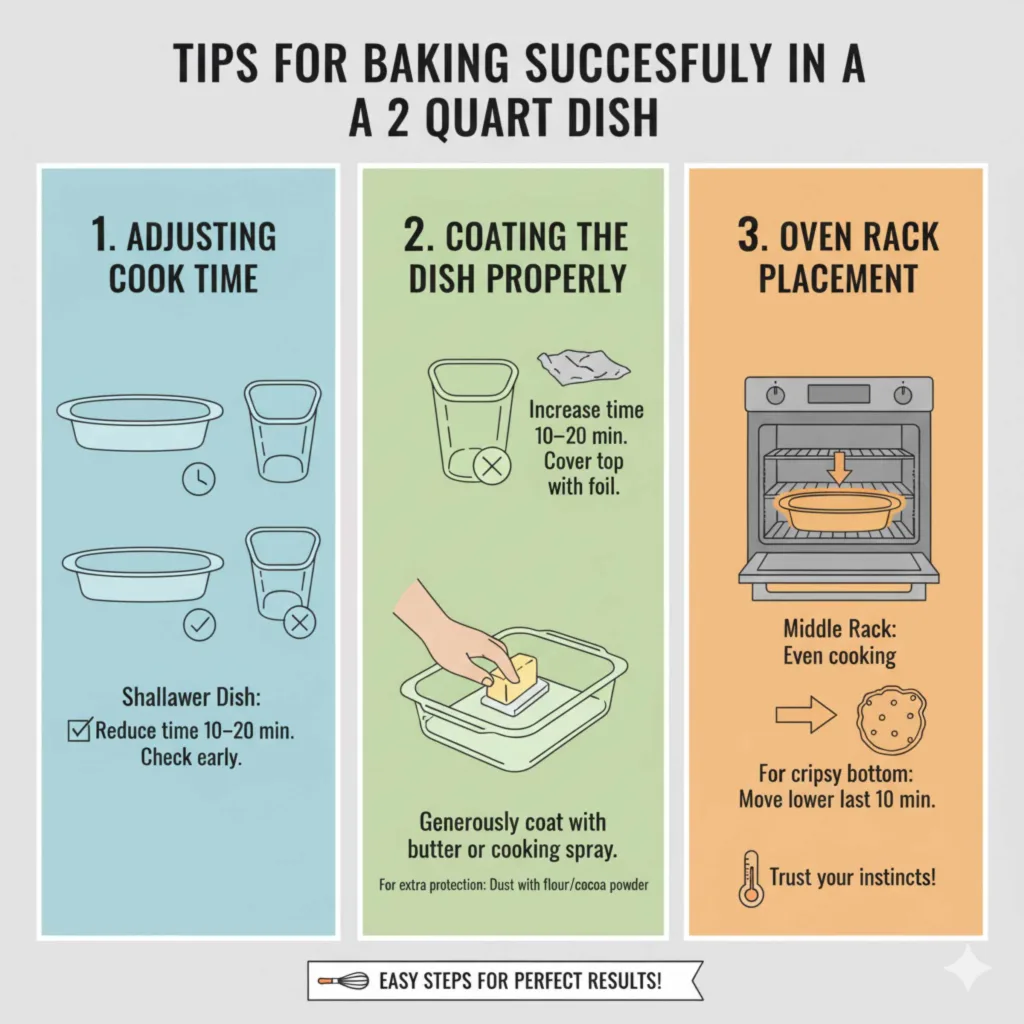
1. Adjusting Cook Time
If you must substitute—say you only have a 1.5-quart dish but the recipe calls for 2 quarts—you will need to adjust the time.
- If the dish is shallower: Reduce the baking time by 10–20 minutes. Check for doneness earlier than the recipe suggests.
- If the dish is deeper: Increase the baking time by 10–20 minutes. Cover the top with foil for the first half of the cooking time to prevent the top from burning before the center is cooked through.
2. Coating the Dish Properly
This step is crucial for easy cleanup and preventing sticking, which can ruin the bottom layer of your casserole.
- Generously coat the interior surface with butter, margarine, or cooking spray.
- For extra protection against sticking, especially with sugary desserts, dust the greased pan with a light coat of flour or cocoa powder (if making a chocolate dish).
3. Oven Rack Placement
For almost all casserole recipes in a 2-quart dish, you want the dish centered on the middle oven rack. This positioning gives the radiant heat from both the top and bottom elements an equal chance to cook the food evenly. If your recipe requires a very crispy bottom crust, you might temporarily move the rack one notch lower for the last 10 minutes, but always keep a close eye on it! Trust your instincts; if it looks like it’s browning too fast, pull it out a little sooner.
Frequently Asked Questions (FAQ) About Casserole Dish Sizing
Q1: Can I use a 2-quart oval dish instead of a 2-quart rectangular dish?
A: Yes, generally you can! As long as the volume is 2 quarts, the shape—oval, square, or rectangular—should not significantly affect the cooking time, provided the depth is similar (2 to 3 inches). The food will just be arranged differently in the oven.
Q2: If a recipe just says “9×13 pan,” what size quart is that?
A: A standard 9×13 inch baking dish (which is often the same as a half-sheet pan) is much larger than a 2-quart dish. A 9×13 dish typically holds about 3 to 4 quarts of volume, depending on the depth.
Q3: My Pyrex dish doesn’t have a quart marking. How do I figure out its size?
A: The most reliable way is the water filling method described above. Alternatively, Pyrex often stamps the dimensions (e.g., 8×8) or sometimes even the quart size on the bottom edge of the glass molding.
Q4: Is it safe to use a very deep 2-quart dish?
A: It is safe, but the cooking results will change. Very deep (4+ inches) containers mean the center takes far longer to reach the proper temperature. Food on the top might dry out or burn before the middle is safe to eat. Stick to 3 inches deep or less for best baking results.
Q5: Does the material of the 2-quart dish change the required cooking time?
A: Yes, it does. Metal heats fastest, followed by glass, then ceramic/stoneware. Always subtract about 25°F from the recipe temperature if using glass or metal, and check for doneness early. Metal usually requires slightly less time overall compared to glass.
Q6: What is the standard size for a single-serving or personal casserole?
A: A typical single-serving or personal casserole dish is usually around 10 to 16 ounces, which equates to about 1/2 quart to 1 quart in volume, much smaller than a 2-quart dish.
Conclusion: Baking with Confidence in Your 2 Quart Dish
A 2-quart casserole dish may sound like a simple measurement, but understanding its true size makes a big difference in how your recipes turn out. In most kitchens, a 2-quart dish translates to roughly 9 × 7 inches (rectangular) or 8 × 8 inches (square), with a depth of about 2–3 inches. This size is ideal for everyday cooking—large enough to feed a small family, yet compact enough to ensure even cooking and great texture.
By knowing the difference between volume and physical dimensions, you can confidently choose the right dish, avoid overflows, and prevent food from drying out. Measuring the dish you already own, understanding how materials like glass, ceramic, or metal affect baking, and matching recipes to the correct pan size all help you get consistent, reliable results.
In short, a 2-quart casserole dish is a versatile kitchen essential. Once you understand its dimensions and best uses, you’ll be able to follow recipes with confidence, make smart substitutions when needed, and enjoy better baking outcomes every time.