
Ramadan is a time of sharing and celebration, and what better way to show your love than with delicious food? Finding the perfect Delicious Ramadan Dessert Recipes to Impress Guests can feel tricky. You might think it’s too difficult or time-consuming, but don’t worry! We’ll show you that creating amazing desserts is easier than you believe. This guide offers step-by-step instructions, making it simple for anyone to whip up treats everyone will adore. Let’s get started and make this Ramadan unforgettable with sweet, delightful dishes.
Sweet Treats for a Memorable Ramadan
Ramadan is a special time for family and friends to get together, and food is a big part of that. Thinking up creative dessert ideas can feel like a chore, but it doesn’t have to be. This section provides a look into the exciting world of sweets. You’ll explore the importance of presentation, the key ingredients to use, and some easy-to-follow recipes. You’ll also find tips for planning your dessert menu and staying organized in the kitchen. Preparing desserts should be enjoyable. This helps you host a memorable Ramadan gathering.
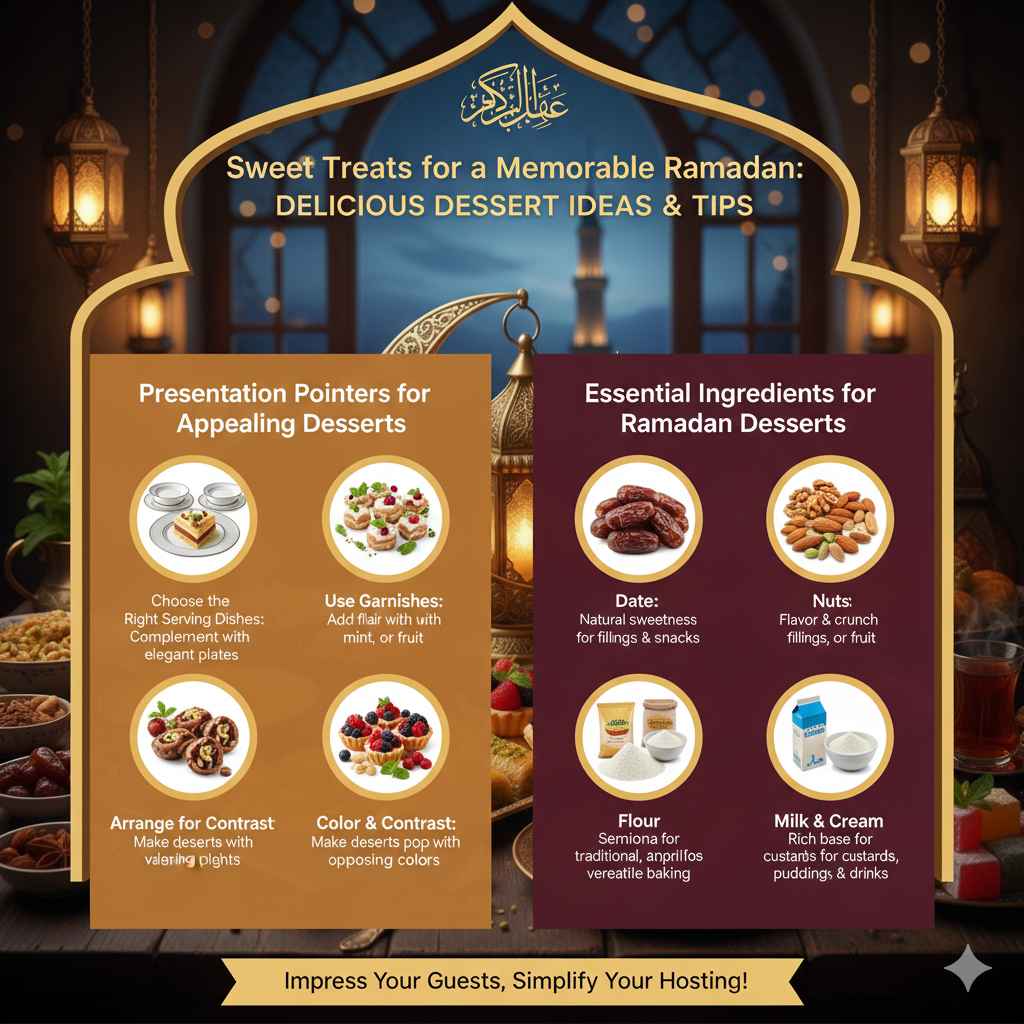
Presentation Pointers for Appealing Desserts
The way food looks is almost as important as how it tastes, particularly when it comes to desserts. Eye-catching presentations add to the overall eating experience. The first step involves picking the right plates, bowls, and serving dishes. Think about colors and styles that match the vibe of your gathering. Simple, clean plates are often a great choice for showing off the food. You can also use decorative platters.
Arrange desserts in a way that looks appealing. Use garnishes such as fresh fruit, sprinkles, or nuts. Consider height and visual flow. Make sure to put desserts at different heights for better visual appeal. These small touches make your desserts look extra special.
Choose the right serving dishes: Select plates, bowls, and platters that complement your desserts. Different sizes and shapes can enhance the presentation. Make sure they are clean, and look nice.
Use garnishes: Adding small garnishes such as fresh mint leaves, a sprinkle of nuts, or a dusting of powdered sugar, can make a huge difference in the overall appearance of your dessert. Get creative and make it look fun!
Consider color and contrast: Think about the colors of your desserts and the serving dishes. Use contrasting colors to make the desserts stand out. Bright colors grab people’s attention.
Arrange for visual interest: Think about how to arrange your desserts on the serving platters. Varying the height and placement of different desserts creates a more dynamic and appealing display. Make sure it all looks good.
Essential Ingredients for Ramadan Desserts
The right ingredients are key for amazing desserts. For many Ramadan desserts, dates are the stars. They add natural sweetness and a rich texture. Other important ingredients include nuts like almonds, pistachios, and walnuts. These add a nice crunch and flavor. Milk and cream are the base for creamy desserts. Spices such as cinnamon, cardamom, and saffron give a distinctive flavor and aroma.
When choosing ingredients, quality matters. Fresh ingredients always make a difference. Consider the origin of ingredients too, especially when it comes to things like spices. High-quality ingredients can elevate the flavors, making your Ramadan desserts truly special.
Dates: Dates are a cornerstone of Ramadan. They are naturally sweet, so they often replace refined sugars. Medjool dates are especially soft and caramel-like. They’re great for fillings and snacks.
Nuts: Almonds, pistachios, and walnuts are common. Nuts offer flavor and crunch. They can be added to recipes, used as toppings, or made into nut butters.
Flour: Semolina flour is often used for traditional desserts such as basbousa. Regular all-purpose flour works well in many recipes. Think about the texture you want when picking a type of flour.
Milk and Cream: Milk and cream are used in custards, puddings, and drinks. Full-fat milk and heavy cream give a rich texture. They work great for setting up creamy desserts.
Traditional and Modern Ramadan Dessert Ideas
When it comes to desserts, mixing the old and the new is a great way to go. Traditional desserts carry the memories of past Ramadans, and modern treats bring new experiences. This section takes you on a trip through classic recipes, like kunafa and baklava, which are popular during this time. You’ll also explore ways to change classic recipes.
Finally, it gives you some ideas for putting a modern spin on desserts. This ensures you can meet different tastes. Whether you prefer the classics or are ready to explore new flavors, you will find something to make your Ramadan celebration special.
Classic Dessert Recipes to Enjoy
Traditional desserts are an essential part of Ramadan. They bring back memories and bring people together. Kunafa is a sweet cheese pastry that is drenched in syrup. It is crunchy and rich. Baklava is another beloved treat. It involves layers of flaky pastry filled with nuts and soaked in syrup.
Umm Ali is a bread pudding. It is creamy, warm, and comforting. These desserts often have a long history and remain popular because they taste good and bring a sense of tradition. Creating these classic recipes lets you share cultural heritage. They are all made to be enjoyed with family and friends.
Kunafa: This is a Middle Eastern dessert. It has shredded pastry, cheese, and syrup. The cheese is usually soft. The pastry gets crunchy after baking. The syrup is often scented with rosewater or orange blossom water.
Baklava: Baklava is a dessert with layers of phyllo pastry. They are filled with chopped nuts. After baking, it’s soaked in syrup. This makes it sweet and sticky. It’s a very popular treat in many countries.
Umm Ali: Umm Ali is a bread pudding, often made with bread, milk, and cream. The bread soaks up the liquid. It’s often flavored with nuts and dried fruits. This dessert is comforting and easy to make.
Dates Stuffed with Nuts: Dates stuffed with nuts are a simple, delicious treat. Dates are naturally sweet. The nuts add a nice crunch. Different nuts such as almonds or pistachios may be used.
Experimenting With Classic Recipes
You can adjust classic recipes to meet your needs and preferences. Start by changing the sweetness levels of your desserts. Try using less sugar or honey in the syrup. Add natural sweeteners such as dates or maple syrup. You can also experiment with different flavors. Add spices such as cinnamon or cardamom. Using rosewater or orange blossom water can give desserts a distinctive taste.
Another way to change recipes is through textures. Try to change the way you prepare nuts or pastries. These kinds of small adjustments can make classic desserts feel fresh and new. They let you personalize the recipes.
Reducing Sugar: Cut down on the sugar in syrup by using less or replacing it. Honey or maple syrup work well. This makes the dessert less sweet. Try using natural sweeteners.
Adding Spices: Introduce spices like cinnamon, cardamom, or nutmeg. They add warmth and depth to flavor. These spices help make the dessert more special. They also enhance the flavor.
Using Different Nuts: Experiment with various nuts. Try pistachios, pecans, or macadamia nuts. Each has a different flavor and texture. This can change how the dessert feels.
Flavor Infusions: Use rosewater or orange blossom water in your syrups or creams. They bring a floral hint. You can also use fruit purees. Flavor infusions give a refreshing twist.
Recipes to Prepare Before Ramadan
Planning ahead for Ramadan can save you time. Start by making some of your desserts. Desserts that freeze well are useful. You can prepare them weeks or even months in advance. Consider making syrups, sauces, or nut mixtures. You can also organize your kitchen and make a shopping list.
Getting ready beforehand will reduce your stress. This will let you focus on prayer and family during Ramadan. By preparing some recipes early, you can enjoy the holiday more fully.
Make-Ahead Dessert Options for Ramadan
You can make some desserts ahead of time. This helps when you have a lot to do during Ramadan. Many desserts freeze well. This includes things like cookies, brownies, and some cakes. You can freeze them unbaked or after baking, depending on the recipe. Also, prepare components like syrup, nut mixtures, or fruit purees. You can store these in the refrigerator or freezer. When Ramadan arrives, you can put the pieces together. Prepping certain dishes can help you manage your time during the holiday. These efforts will make the process easier.
Cookies and Brownies: These treats freeze very well. You can bake them completely and then freeze. Or, you can freeze cookie dough for fresh cookies later. Brownies are ready to go.
Cakes: Cakes can be prepared and frozen too. Cakes often stay well. Wrap the cake in plastic and then foil to prevent freezer burn. Defrost and frost the cake when ready to use.
Syrups and Sauces: Prepare syrups like simple syrup or fruit sauces. Store them in airtight containers in the fridge or freezer. They are ready to use when you need them.
Nut Mixtures: Make mixtures of chopped nuts. These are useful for toppings or fillings. Freeze these. It saves time. They can be thawed quickly when needed.
Kitchen Organization for Efficient Baking
Organizing your kitchen is key to a smooth baking process. Start by making sure all your tools and ingredients are within easy reach. Arrange your pantry and fridge. Keep items you use often at eye level. Measure out ingredients in advance. This can save time during the baking. Organize your work space. Clean as you go. This helps prevent clutter and keeps you focused. These small steps will help you enjoy the process. Planning saves energy. This gives you more free time during the holy month.
Pantry Organization: Arrange your pantry items such as flour, sugar, and spices. Group like items. Store essentials in easy-to-reach places. Clear containers can let you see the contents.
Fridge and Freezer Storage: Organize your fridge. Store ingredients and prepared items in labeled containers. Label everything with the date and contents. Labeling helps you track food.
Ingredient Pre-measuring: Measure out dry ingredients ahead of time. This means flour, baking soda, and spices. Store these in small containers or bags. This is useful when baking.
Work Space Management: Keep your work area clear and clean. Wash dishes as you go. This stops the buildup of dishes. This strategy keeps you focused. It helps maintain flow.
Dessert Planning and Timing
Planning your dessert menu will make the preparation a success. Think about which desserts you will prepare. Consider how many guests you will host. Make sure you have enough. Plan for a mix of flavors and textures. Also, think about how long each dessert takes to prepare. If you are short on time, choose simpler recipes. Organize your shopping list and have all your ingredients. Good planning leads to a successful and stress-free Ramadan.
Creating Your Ramadan Dessert Menu
Creating your dessert menu should be a fun process. Start by taking note of the people you are hosting and their food preferences. You may want to offer a mix of classic and modern desserts. Make sure to have a variety of tastes. Think about different textures, like creamy, crunchy, or chewy. Try to include some light desserts, such as fruit salads. Consider the weather. Select lighter desserts if the weather is hot. Balance the menu by adding both simple and elaborate desserts. This is fun and makes it enjoyable for the guest. Finally, make sure to consider any dietary needs.
Guest Preferences: Find out what your guests like. Are they fans of traditional sweets, or do they like new flavors? Taking into account preferences means everyone is delighted.
Variety of Flavors: Offer desserts with different flavors. Have something fruity, something chocolatey, and something with nuts. A variety of tastes makes the meal interesting.
Textural Diversity: Balance the textures. Include some desserts that are creamy. Also add some crunchy ones. Some should be soft. Having different textures improves the eating experience.
Ease of Preparation: Include some simple, quick recipes. This can make the planning easier. Have a mixture of dishes that take less or more effort. This helps with time management.
Scheduling and Timing Your Dessert Preparation
Scheduling is key to getting everything done without stress. Create a schedule for when you will prepare your desserts. Start with a list of the recipes you have chosen. Then, look at each one. Determine how much time is needed. Schedule recipes that take a long time to make. You can start preparing these a few days before Ramadan begins. Make sure you leave enough time to finish your preparations. If you have guests, set up a plan for the day of the gathering. It should include the timing of dessert preparation. With clear scheduling, you can prepare everything without feeling overwhelmed.
Recipe Assessment: Look at each recipe and decide how long it will take. Write down the prep time. Then write down the baking or chilling time. Knowing the time is helpful.
Preparation Schedule: Build a schedule based on your recipes. Make the most complex desserts first. Start preparations a few days before the event. Plan and prepare ahead.
Day-of Timing: On the day of the event, schedule the final steps. Set up when to decorate and serve the desserts. Plan for when each dessert should be prepared.
Flexibility: Always be ready to change your plans. Things can come up. Have backup plans if something goes wrong. This will help you manage any issues with grace.
Tips for Success in the Kitchen
Here are some more tips for a smooth dessert-making experience. First, read each recipe carefully. Check that you have all the ingredients and equipment you need before you start. Be precise. Correct measurements are essential for good results. Taste your food as you go. Adjust seasonings to your liking. Most importantly, enjoy the process. Preparing desserts should be fun and not stressful. These steps can lead to a successful outcome. With patience and enjoyment, you can prepare the perfect Ramadan dessert.
Mastering Baking Techniques and Measurements
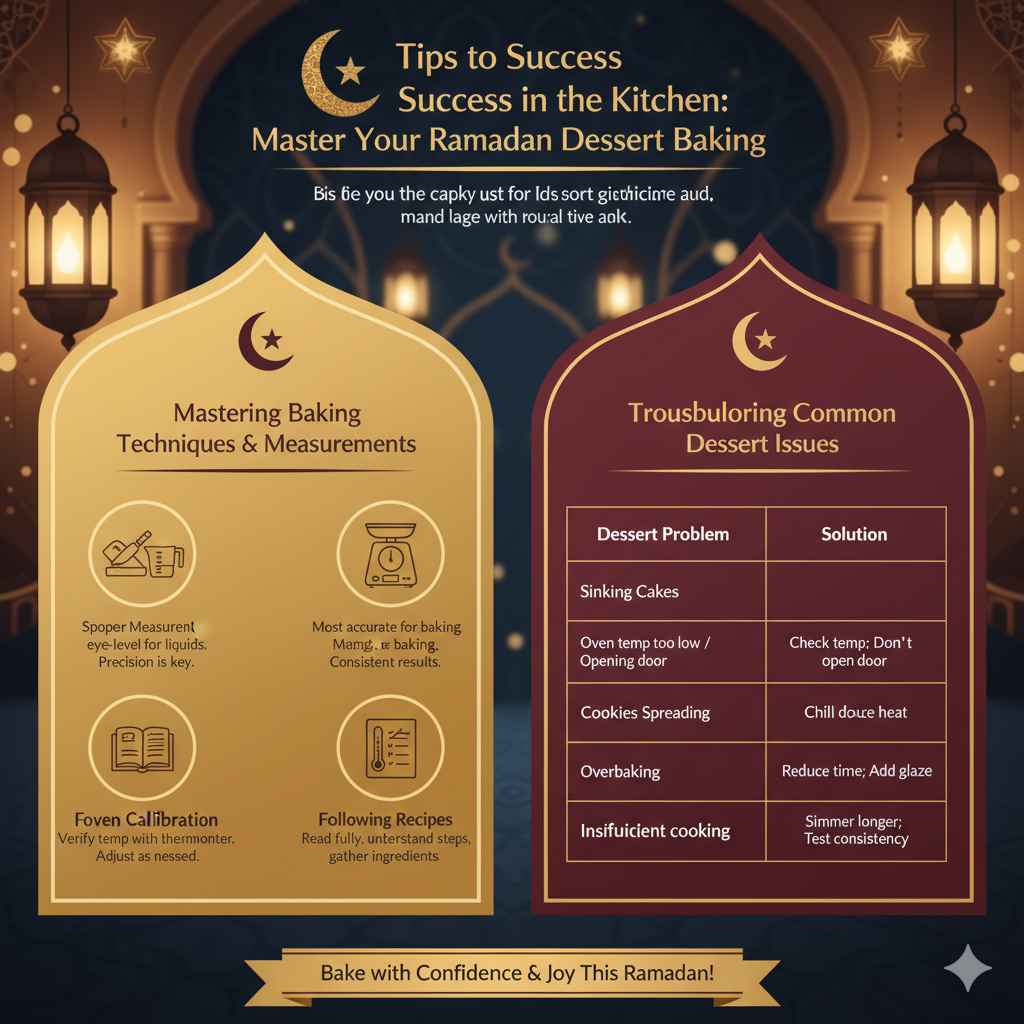
Accurate measurements are important in baking. For dry ingredients, level off the measuring cup with a knife or spatula. If a recipe says “spoon and level” for flour, spoon the flour into the measuring cup and level it off. For liquids, use liquid measuring cups. Measure at eye level. When using the oven, know your oven and its specific temperatures.
Calibrate your oven, if necessary. For best results, use a kitchen scale. This will allow you to be as precise as possible. It is a good way to improve your outcomes. These methods lead to consistently good outcomes.
Proper Measurement Techniques: For dry ingredients, spoon flour into the measuring cup and level it off. When measuring liquids, use a liquid measuring cup and check at eye level. Accuracy is key.
Using a Kitchen Scale: A kitchen scale offers the most accurate measurements, particularly for baking. It ensures consistent results. Use it often.
Oven Calibration: Test your oven temperature. Use an oven thermometer to verify the correct temperature. Make adjustments if needed.
Following Recipes: Always read the recipe fully. Make sure you understand all the steps. Check you have all the ingredients. Recipe understanding can help you to bake well.
Troubleshooting Common Dessert Issues
Sometimes you might face challenges when making desserts. Here is how to fix common problems. If your cake sinks, it might be the oven temperature. Ensure the oven is at the right temperature. If your cookies spread too much, the oven may be too hot. Adjust the temperature. For cakes or cookies that are too dry, make sure you don’t overbake them. If the syrup for baklava is not syrupy enough, cook it longer. These tips help you get it right. They offer ways to solve problems that you may encounter in the kitchen.
Sinking Cakes: If your cake sinks, the oven temperature may be too low. Check the oven temperature with an oven thermometer. Also, don’t open the oven door too often.
Cookies Spreading Too Much: This often means the oven is too hot or the dough is too soft. Chill the dough or reduce the baking temperature.
Dry Cakes or Cookies: Don’t overbake your cakes or cookies. Follow baking times. Add some moisture such as a glaze.
Syrup Not Thickening: If your syrup is thin, continue simmering it until it thickens. Test it by dropping a bit in cold water. If it forms a ball, it is ready.
| Dessert Problem | Possible Cause | Solution |
|---|---|---|
| Cake Sinking | Oven temperature too low | Check oven temperature; do not open oven often |
| Cookies Spreading | Oven too hot or dough too soft | Chill the dough; reduce baking temperature |
| Dry Desserts | Overbaking | Reduce baking time; add glaze or sauce |
| Thin Syrup | Insufficient cooking | Simmer syrup longer; check consistency |
Frequently Asked Questions
Question: What are the must-have ingredients for Ramadan desserts?
Answer: Essential ingredients include dates, various nuts (almonds, pistachios, walnuts), flour, milk, cream, and spices such as cinnamon and cardamom.
Question: How can I prepare desserts ahead of time?
Answer: You can make cookies, brownies, and cakes and freeze them. Also, you can prepare syrups, sauces, and nut mixtures and store them in the fridge or freezer.
Question: How do I prevent my cake from sinking?
Answer: Make sure your oven is at the correct temperature and avoid opening the oven door too often during baking.
Question: What’s the best way to present my desserts?
Answer: Use appealing serving dishes, add garnishes like fresh fruit or nuts, and consider colors and contrast to make your desserts look inviting.
Question: How do I store leftover Ramadan desserts?
Answer: Store desserts in airtight containers in the fridge. For items to be kept longer, store them in the freezer, well wrapped to prevent freezer burn.
Final Thoughts
Creating Delicious Ramadan Dessert Recipes to Impress Guests doesn’t have to be hard. You can create amazing desserts to enjoy with family and friends. Start with good ingredients, practice some easy techniques, and plan ahead. We’ve gone over many things. We showed you how to plan a menu, schedule your time, and organize your kitchen. We have also talked about how to bake well and to fix common issues. Remember that it’s important to have fun while cooking.
It’s a chance to build special memories with the people you love. Try new things. Don’t be scared to experiment with flavors. Share the joy of delicious homemade treats. You have everything you need to become a dessert expert. Ramadan is a time to share and bring joy to your guests. Enjoy this special time in the kitchen. Make the holiday sweeter.