
For most home cooks, aluminum core cookware is the essential winner. It provides fantastic, even heating and quick responsiveness at a budget-friendly price point. While copper core offers elite, professional-level performance for precise temperature control, its high cost and weight make aluminum the more practical and valuable choice for everyday cooking.
Walking through the kitchen aisle can feel like a pop quiz you didn’t study for. You see words like “tri-ply,” “fully clad,” “anodized,” and dozens of brands all promising the perfect sear. It’s enough to make you want to give up and order takeout. But what if the secret to choosing great cookware was actually simple?
The truth is, the most important part of a pan is the part you can’t even see: its core. This hidden layer is the engine that drives your cooking. Understanding the difference between the two most common core materials—copper and aluminum—is the key to unlocking better meals and making a smart purchase. In this guide, we’ll break down everything you need to know about copper vs. aluminum core cookware, with no confusing jargon. You’ll learn which one is right for you, your budget, and your cooking style.
What is a Cookware Core and Why Does It Matter?
Think of your favorite sandwich. You have the bread on the top and bottom, but the delicious fillings in the middle are what make it special. Cookware works in a similar way. Most high-quality stainless steel pots and pans are “clad,” which is just a fancy word for layered or sandwiched.
The outer layers are usually made of stainless steel because it’s durable, non-reactive (it won’t make your tomato sauce taste metallic), and easy to clean. However, stainless steel is a terrible heat conductor on its own. It heats up slowly and develops hot spots, leading to burnt food in one area and undercooked food in another.
To fix this, manufacturers sandwich a layer of a highly conductive metal inside the stainless steel. This middle layer is the “core.” Its job is to grab heat from the burner and spread it quickly and evenly across the entire cooking surface. The two best metals for this job are copper and aluminum.
A good core material will do two things exceptionally well:
- Heat Conductivity: How quickly and evenly the metal spreads heat. Great conductivity means no more hot spots and consistent cooking results.
- Heat Responsiveness: How quickly the pan heats up when you turn the flame on and cools down when you turn it off. This gives you precise control over your cooking temperature.
Choosing a pan with a high-performance core is the single most important factor for better cooking. It’s more important than the brand name, the handle, or how shiny it looks in the store.

A Deep Dive into Copper Core Cookware
Copper has been the gold standard in professional kitchens for centuries, and for good reason. It is one of the most thermally conductive materials available for cookware, second only to silver. When used as a core, it transforms a simple pan into a precision cooking instrument.
The Pros of Copper Core Cookware
- Unmatched Heat Conductivity: Copper heats up incredibly fast and spreads that heat with near-perfect evenness. This means the center of your pan will be the same temperature as the edges, giving you a perfect wall-to-wall sear on a steak.
- Incredible Responsiveness: This is copper’s superpower. When you lower the heat, a copper core pan responds almost instantly. This gives you amazing control when making delicate sauces, melting sugar, or cooking fish, as you can prevent scorching the moment you adjust the temperature.
- Superior Temperature Control: Because it responds so quickly, you can make micro-adjustments to the heat and see the results immediately. This is why many professional chefs swear by it for sensitive tasks.
The Cons of Copper Core Cookware
- Extremely Expensive: The biggest drawback is the price. Copper is a costly raw material, and the process of bonding it to stainless steel is complex. A single copper core pan can cost as much as an entire set of aluminum core cookware.
- Very Heavy: Copper is a dense metal, which makes these pans significantly heavier than their aluminum counterparts. This can be a challenge for some cooks, especially when tossing food or washing up.
- Can Be High-Maintenance: While the core is protected by stainless steel, some pans feature an exposed copper band for aesthetic reasons. This band can tarnish over time and requires occasional polishing to maintain its shine.
Who Should Buy Copper Core Cookware?
Copper core cookware is an investment for serious and passionate home cooks. It’s perfect for you if:
- You frequently cook delicate, temperature-sensitive dishes like hollandaise sauce, custards, or risotto.
- You value precision and want your cookware to respond instantly to changes in heat.
- Budget is not your primary concern, and you are willing to invest in top-tier, professional-grade equipment.
A Deep Dive into Aluminum Core Cookware
Aluminum is the most common core material used in modern clad cookware, and it has earned that spot. It offers a fantastic balance of performance and affordability that makes it the ideal choice for the vast majority of home kitchens. While not quite as conductive as copper, a thick aluminum core provides excellent heating that is more than capable for almost any cooking task.
The Pros of Aluminum Core Cookware
- Excellent Heat Conductivity: A good quality aluminum core pan heats up quickly and evenly, eliminating frustrating hot spots. While copper is technically superior, the difference in everyday cooking is often very small. You’ll still get a great sear and even browning.
- Lightweight and Easy to Handle: Aluminum is much less dense than copper, making these pans lighter and easier to lift, tilt, and maneuver. This makes cooking more comfortable, especially during long sessions.
- Affordable and Accessible: This is aluminum’s biggest advantage. Aluminum core cookware offers about 90% of the performance of copper at a fraction of the cost. You can get a high-quality, durable set for a very reasonable price.
- Very Durable: When sandwiched in stainless steel, an aluminum core is protected and will last for decades with proper care.
The Cons of Aluminum Core Cookware
- Slightly Less Responsive: Aluminum holds onto heat a little longer than copper. This means it won’t react to temperature changes quite as instantly. For most cooking, this isn’t noticeable, but for highly delicate tasks, copper has the edge.
- Quality Varies: Because it’s so common, the quality of aluminum core cookware can vary widely. Very cheap, thin pans may still have hot spots or be prone to warping. It’s important to choose a reputable brand with a substantial, heavy-gauge core.
Who Should Buy Aluminum Core Cookware?
Aluminum core cookware is the perfect workhorse for nearly every home cook. It’s the right choice for you if:
- You want excellent all-around performance for a wide range of cooking tasks, from frying eggs to simmering stews.
- You are a beginner or everyday cook looking for the best value for your money.
- You appreciate cookware that is effective, durable, and easy to handle without being too heavy.
Head-to-Head Comparison: The Essential Winner
When you put them side-by-side, the best choice for most people becomes clear. While copper wins on pure performance, aluminum wins on overall value and practicality. Let’s break it down feature by feature.
| Feature | Copper Core | Aluminum Core |
|---|---|---|
| Heat Performance | Exceptional. Heats fastest and most evenly. Responds instantly to temperature changes. | Excellent. Heats quickly and very evenly. Slightly slower to respond than copper but still very good. |
| Weight | Heavy. Can be difficult for some users to lift and handle, especially when full. | Lightweight. Easy to manage, toss food, and clean. Much more user-friendly. |
| Durability | Extremely durable and long-lasting when clad in stainless steel. A lifetime investment. | Very durable. A quality pan will last for decades. Cheaper, thinner pans can be prone to warping. |
| Price | Very High. A premium, luxury product with a price tag to match. | Affordable. Offers incredible performance for the price, making it a fantastic value. |
| Best For | Passionate food enthusiasts and professional chefs who need absolute precision. | Beginners, everyday cooks, and anyone looking for the best overall performance and value. |
The Verdict
For 99% of home kitchens, aluminum core cookware is the clear winner. The slight performance boost from copper simply doesn’t justify the massive jump in price and weight for everyday tasks like sautéing vegetables or boiling pasta. A well-made aluminum core pan will give you beautiful, consistent results day in and day out, without breaking the bank or your wrist.
How to Choose the Right Cookware For Your Kitchen
Now that you know the difference, how do you pick the perfect pan? Here are a few simple questions to ask yourself before you buy.
1. What is Your Budget?
This is the most important starting point. Be realistic about what you can spend. You can find excellent, high-performance aluminum core cookware sets from reputable brands for a few hundred dollars. A comparable copper core set could easily cost over a thousand dollars. Don’t feel pressured to buy the most expensive option; a great aluminum core pan will serve you better than a mediocre one you can barely afford.
2. What is Your Cooking Style?
Are you a weekend gourmet who loves tackling complex recipes, or are you focused on getting simple, healthy meals on the table during the week?
- If you spend hours perfecting sauces or searing delicate scallops, the precision of a copper core might be worth the investment.
- If your go-to meals are stir-fries, pasta, soups, and pan-fried chicken, a high-quality aluminum core will do everything you need it to do beautifully.
3. What Kind of Cooktop Do You Have?
Most modern clad cookware works on gas and electric stovetops. However, if you have an induction cooktop, you need to be careful. Induction cooking works through magnetism.
- Neither copper nor aluminum is magnetic.
- For a clad pan to be induction-compatible, its outermost layer must be made of magnetic stainless steel.
- Always check the product description or packaging for an “induction compatible” symbol before buying. Most major brands now make their clad cookware induction-ready, but it’s always best to confirm.
Caring For Your Core Cookware
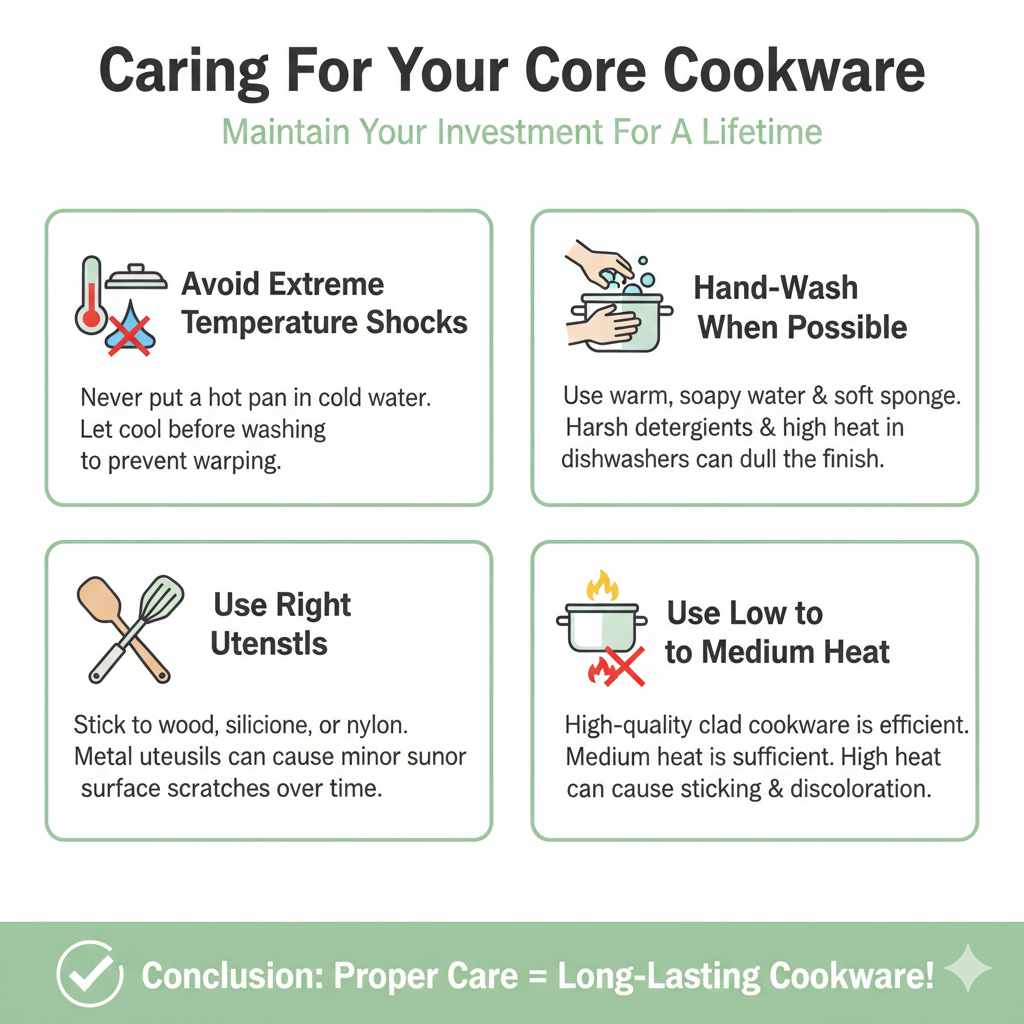
Whether you choose copper or aluminum core, proper care will ensure your investment lasts a lifetime. Stainless steel clad cookware is tough, but a little TLC goes a long way.
- Avoid Extreme Temperature Shocks: Never plunge a hot pan into cold water. This can cause the metal to warp. Let the pan cool down for a few minutes before washing.
- Hand-Wash When Possible: While many pans are listed as “dishwasher safe,” the harsh detergents and high heat can dull the finish over time. A quick wash with warm, soapy water is usually all it takes to clean them. For stubborn bits of food, you can find helpful, non-abrasive cleaning tips from university resources like the Utah State University Extension.
- Use the Right Utensils: To avoid scratching the stainless steel cooking surface, try to use wooden, silicone, or nylon utensils. While metal utensils are generally safe on stainless steel, they can cause minor surface scratches over time.
- Use Low to Medium Heat: High-quality clad cookware is so efficient that you rarely need to crank the heat to high. Starting your preheating on medium allows the core to distribute the heat evenly. High heat can cause food to stick and can lead to discoloration of the stainless steel.
Frequently Asked Questions (FAQ)
1. Is copper core cookware worth the money?
For most people, no. It’s a luxury item for serious cooking enthusiasts who need the absolute best temperature control for delicate tasks. For everyday cooking, high-quality aluminum core cookware provides comparable performance at a much more reasonable price.
2. Is aluminum core cookware safe?
Yes, it is completely safe. The aluminum core is securely sandwiched between layers of non-reactive stainless steel. The aluminum never comes into contact with your food. This construction provides all the heating benefits of aluminum with the safety and durability of stainless steel, a practice confirmed as safe by agencies like the U.S. Food & Drug Administration for food-contact surfaces.
3. Can I use copper or aluminum core pans on an induction stove?
It depends on the pan’s outer layer. Since neither copper nor aluminum is magnetic, the pan must have an outer layer of magnetic-grade stainless steel to work on an induction cooktop. Most modern, high-quality clad cookware is designed to be induction-compatible, but always check the product specifications to be sure.
4. What does “clad,” “tri-ply,” or “5-ply” mean?
“Clad” simply means the cookware is made from layers of different metals bonded together. “Tri-ply” means three layers (typically stainless steel, aluminum/copper core, stainless steel). “5-ply” means five layers, often adding extra layers of aluminum or copper to improve heat distribution and retention even further. For most home cooks, a well-made tri-ply pan is the sweet spot for performance and price.
5. Which is better for a beginner cook?
Aluminum core is, without a doubt, the best choice for a beginner. It’s forgiving, heats evenly, is lightweight, and is very affordable. It allows you to learn and grow as a cook on high-performance equipment without a massive initial investment.
6. How can I tell if a pan has a good core?
Look for a pan that feels solid and has some heft to it, but isn’t excessively heavy. The base should be thick and flat. Reputable brands will clearly state the core material (e.g., “aluminum core,” “copper core”) and often the number of layers (e.g., “3-ply construction”) on the packaging or in the online description. Avoid pans that feel flimsy or very light, as they likely have a thin core that won’t heat evenly.
Conclusion: The Smart Choice for Your Kitchen
Choosing new cookware shouldn’t be stressful. Once you look past the marketing and focus on what really matters—the core—the decision becomes much simpler. Copper core cookware represents the peak of performance, offering a level of precision that is truly remarkable. It’s a beautiful, high-end tool for the dedicated chef who will use its capabilities to the fullest.
However, for the rest of us, aluminum core cookware is the essential winner. It delivers outstanding, even heating, great responsiveness, and rugged durability, all in a lightweight and affordable package. It strikes the perfect balance between performance and practicality, making it the ideal foundation for any home kitchen. By choosing a quality aluminum core pan, you are not settling; you are making the smartest, most valuable choice for creating countless delicious meals for years to come.