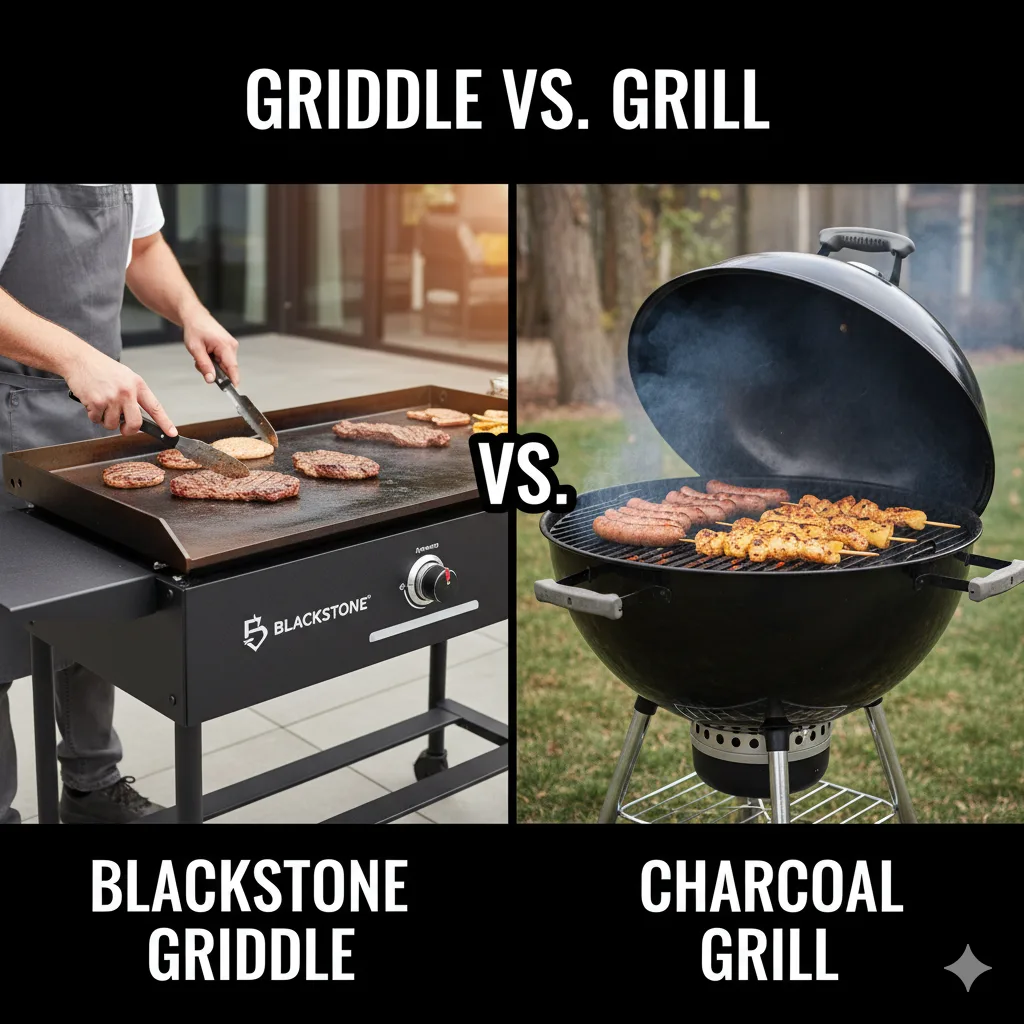
The choice between a Blackstone Griddle and a traditional Grill comes down to cooking style, desired flavor profile, and ease of cleanup. Griddles offer superior temperature control and flat-top searing for smash burgers and breakfast, while grills provide classic smoky char and are better for vertically cooking large cuts or needing open flame access.
Are you staring at your backyard, ready to upgrade your outdoor cooking setup but feeling stuck between two big metal boxes? You are not the only one! Deciding between a Blackstone griddle and a classic backyard grill is a common headache for new and experienced cooks alike. Each one cooks food differently, offering distinct tastes and textures. Worrying about making the wrong choice is normal, but it doesn’t have to be complicated. We will break down exactly what makes each one special. By the end, you will know which one fits your kitchen style perfectly. Let’s pull back the hood and see what these outdoor chefs can really do!
Blackstone Griddle Vs Grill: Understanding the Core Difference
When we talk about a “Blackstone Griddle” versus a “Grill,” we are really talking about the cooking surface. This one simple difference changes everything about how your food cooks, tastes, and even how you clean up afterward.
What is a Blackstone Griddle? (It’s About the Flat Top)
Think of your Blackstone griddle like a giant, powerful electric stovetop, but fueled by propane. The cooking surface is a solid, thick sheet of steel. All the heat from the burners below spreads evenly across this flat surface.
Why is this a game-changer?
Total Contact: When you put a burger patty on a griddle, the entire bottom of that patty makes contact with the hot steel. This creates an incredible, edge-to-edge crust—what chefs call the Maillard reaction.
Containment: Juices, melted cheese, and cooking oil all stay right there on the surface. They mix with the searing food, adding moisture and flavor back into what you are cooking.
Versatility: Because it’s flat, you can cook anything from tiny fried onions to pancakes, or use a bowl with a bit of water to steam vegetables.

What is a Traditional Grill? (It’s About the Flame)
A traditional grill—whether it uses charcoal or gas—relies on grates. Under those grates, you have fire or heat sources.
How does this affect your meal?
Direct Flame/Radiant Heat: Food sits above the heat source. This allows fat and drippings to fall away, often causing flare-ups that sear and char the food.
Smoke Flavor: Especially with charcoal grills, the smoke carries flavor directly into the meat, giving you that unmistakable barbecue taste.
Grill Marks: You get those classic, defined sear marks where the food touches the hot metal grates, leaving the valleys slightly less cooked.
Quick Comparison Table: Griddle Versus Grill Basics
To see the main differences clearly, here is a quick look at what each tool is best suited for:
| Feature | Blackstone Griddle | Traditional Grill |
|---|---|---|
| Cooking Surface | Solid, flat steel plate | Open metal grates |
| Heat Transfer | Conduction (direct contact) | Radiation and radiant heat |
| Best For Searing | Perfect, even crust (Smash Burgers) | Defined char lines |
| Handling Small Items | Excellent (no falling through) | Poor (requires baskets or foil) |
| Smoke Infusion | Minimal (unless using smoke boxes) | High (especially charcoal) |
Where Does Each Cooker Shine? Use Cases
Choosing the right tool for the job saves time and makes your food taste better. Think about what you cook most often when making your decision.
The Blackstone Griddle’s Superpowers (Go Flat Top!)
Blackstones excel when you need consistency and high-volume cooking without losing moisture or flavor to the airflow below.
1. Smash Burgers and Thin Meats: This is where the griddle rules. Flattening the meat directly onto the screaming hot surface creates the crispiest, most flavorful crust imaginable because all the fat juices stay right there flavoring the meat.
2. Breakfast Cookouts: Pancakes, eggs, hash browns, bacon—everything that usually requires a pan on the stove can be done simultaneously and easily on a griddle. Cleanup is often just a quick scrape afterward.
3. Stir-Fries and Fajitas: You can sauté large quantities of vegetables and strips of meat without any pieces falling into the fire below.
4. Quesadillas and Grilled Cheese: Achieving totally even, golden-brown crispness across the entire surface of the bread is nearly impossible on grates, but easy on a griddle.
The Traditional Grill’s Superpowers (Embrace the Fire!)
The grill is unmatched when you want that classic, smoky, outdoor BBQ flavor and texture.
1. Thick Steaks (Ribeyes, Porterhouse): A high-heat grill allows you to develop a great crust while using indirect heat zones to bring the center up to temperature without burning the outside. The fat drips render, creating smoke that infuses the steak.
2. Chicken Pieces (With Bone): Grills handle irregularly shaped items well. The open flame and ambient heat cook chicken bones evenly, provided you manage the flare-ups.
3. Racks of Ribs or Large Roasts: These benefit greatly from the indirect heat and smoky environment that a kettle or barrel grill provides.
4. Vegetables with High Water Content: Things like asparagus or corn on the cob get great char marks and smoky flavor when placed directly over the heat source.
Design and Setup: What’s Under the Hood?
The physical setup of these two units dictates how you use and maintain them.
Blackstone Griddle Setup: Simple Components
Blackstone units focus on providing intense, even bottom heat.
Burners: Usually runs on propane tanks (like a standard gas grill). They are often arranged linearly beneath the steel plate.
Wind Guards: Because the heat source is low to the flat top, Blackstones often have side shields to prevent wind from cooling the plate unevenly.
Grease Management: This is key! Blackstones use a built-in channel or a small front spout system to funnel rendered fat and juices into a catch cup. Proper grease management is essential for safety and preventing fires.
Traditional Grill Setup: Complex Airflow
Grills must manage airflow to feed the fire and push heat upward through the grates.
Lid Function: The lid is crucial for trapping heat and smoke. It allows for roasting and baking. Griddles usually do not have lids, though some accessories incorporate them.
Heat Distribution: Gas grills use flavorizer bars or ceramic rocks above the burners to vaporize drippings, adding flavor back as smoke. Charcoal grills rely on the briquettes themselves distributing the heat.
Ventilation: Vents (dampers) control oxygen flow, which controls the burn rate and temperature—this is a skill many beginners struggle with.
Safety Note on Fuel and Setup
When dealing with any outdoor cooking appliance, always follow guidelines from organizations like the National Fire Protection Association (NFPA). Ensure your setup is stable, on a level surface, and far away from flammable materials. Check gas connections frequently for leaks using soapy water—bubbles indicate a leak. Remember to never use charcoal inside a gas grill housing or a griddle unless it is specifically designed for it.
Maintenance and Cleanup: Keeping Your Cooker Ready to Rock
This is often the deciding factor for many home cooks. How much work do you want to do after a great meal?
Cleaning the Blackstone Griddle: Seasoning is Key
Cleaning a griddle is like caring for a cast-iron skillet, but on a massive scale.
1. Scraping: Immediately after cooking, while the surface is still hot, use a metal griddle scraper (not a spatula!) to push food bits and excess oil toward the grease trap.
2. Wiping: For most general cooking, a few paper towels wiped across the hot surface, perhaps with a little water to create steam and lift grime, is enough.
3. Seasoning: To prevent rust, the steel must be seasoned—a thin layer of oil baked onto the surface repeatedly. A well-seasoned Blackstone will be black, non-stick, and shiny. If you skip this, your griddle will rust quickly.
Cleaning the Traditional Grill: Dealing with Grates and Ash
Grill cleaning focuses on removing debris from the cooking surface and managing the firebox.
Grates: After preheating, use a stiff-bristled wire brush to scrape off charred residue from the grates. Some people prefer stainless steel or nylon bristles for safety reasons (avoiding ingesting broken wires). Reference safety guidelines from reputable sources like the CDC regarding household safety when discussing potential hazards from tools.
Ash/Drip Pans (Gas/Charcoal): You must regularly empty the ash catcher on a charcoal grill. Gas grills require cleaning out the grease drip pan underneath the flavorizer bars. If these get too full, they become a serious fire hazard.
Burner Maintenance (Gas): Gas burners can clog over time. You may need gentle brushing or poking with a specialized tool to ensure the ports remain clear for even flames.
Maintenance Comparison Table
Here is how the typical maintenance tasks stack up:
| Maintenance Task | Blackstone Griddle | Traditional Grill |
|---|---|---|
| Daily Post-Cook Cleanup | Scrape and Wipe (Fast) | Brush Grates (Medium Speed) |
| Preventing Rust | Requires regular oil seasoning | Requires protecting cover or storing dry |
| Deep Cleaning Time | Re-seasoning (Occasional, several hours) | Scrubbing grates, cleaning firebox (1 hour) |
| Grease/Fat Disposal | Pouring out grease cup | Scraping drippings into disposable pans |
Price Point and Portability: Budget and Mobility
Your budget and how often you plan to move your cooking station also play a role. Generally, both systems offer a wide price range, but there are typical starting points.
Cost Considerations
When you look at the blackstone griddle vs grill pricing, you will find that entry-level models in both categories are comparable.
Starter Blackstones (28” to 36”): Often start around $400–$600 for full cart models. They offer a huge amount of cooking space for the money.
Starter Gas Grills (3-4 Burner): Entry-level quality from established brands can range from $350–$500, but true power often starts closer to the $600 mark.
High-End Models: Premium 4-burner griddles easily exceed $1000, just as high-end pellet grills or ceramic kamado grills do.
Portability Factors
If you plan on taking your cooking on the road, portability matters.
Blackstone Portability: Many popular Blackstone models (like the 17” or 22” tabletop versions) are specifically designed to fold up and fit into the trunk of a car. They are fantastic for tailgating or camping, provided you bring a compatible propane canister.
Grill Portability: While smaller gas grills exist, they tend to be bulkier than their griddle counterparts when packed up. Charcoal grills are often heavier but require no propane tank, just bringing your charcoal supply.
Mastering the Heat: Temperature Control
Heat management is arguably the most critical skill in outdoor cooking, and the two units require different approaches.
Controlling Heat on a Griddle
Blackstones are known for their phenomenal, consistent heat, but they do have limitations related to their flat surface.
1. The Heat Gradient: Since the burners are fixed, you usually have a “hot zone” directly over the flames and cooler edges near the sides. Smart griddle cooks learn to use these zones: searing in the middle and holding food on the cooler edges.
2. Preheating is Non-Negotiable: You must let a Blackstone preheat for a solid 10 to 15 minutes until the entire steel surface is fully saturated with heat. If you start cooking too early, you boil the food instead of searing it.
3. Moisture Management: Because the surface is flat, liquids stay put. If you are cooking something that releases a lot of water (like frozen burgers), you might need to temporarily raise the heat to burn off that water quickly so that searing can occur.
Controlling Heat on a Grill
Grill temperature control is dynamic, relying on fuel input and venting.
1. Venting Power (Charcoal): For charcoal, air intake (bottom vent) feeds the fire, and air exhaust (top vent) lets heat escape. Open vents mean hotter and faster cooking. Partially closing the top vent traps more heat and smoke. This relies heavily on understanding airflow dynamics.
2. Two-Zone Cooking (Gas/Charcoal): This is essential for grilling. You create one side with direct heat (coals piled up or burners turned high) and one side with indirect heat (no coals or burners off). You sear on the direct side and finish cooking slowly on the indirect side.
3. Lid Down Rule: Almost all grilling, except for thin steaks or veggies, should be done with the lid closed. This turns your grill into an outdoor oven, providing consistent, surrounding heat—something a griddle cannot replicate easily.
Which One Should a Beginner Buy?
For someone just starting out in backyard cooking, the choice often comes down to confidence and minimizing mistakes.
Why Beginners Often Lean Toward the Blackstone Griddle
If you are nervous about complex temperature control or burning food because fat drips directly onto flames, the griddle offers a more forgiving entry point.
It mimics stovetop cooking, which most people are already familiar with.
You see exactly what is happening on the surface.
* It’s hard to ruin a batch of eggs or a pile of onions.
When to Go Straight for the Grill
If you prioritize the smoky aroma and deeply charred flavor of classic BBQ—and are willing to learn about fire management—the traditional grill is the way to go. If you dream of weekend brisket or smoking ribs, the grill is your necessary tool.
To learn more about the science behind cooking temperatures and food safety while grilling, trusted resources like university extension programs often provide excellent guidelines on proper internal meat temperatures. For example, the USDA Food Safety and Inspection Service notes critical safe internal cooking temperatures for various meats, which apply whether grilling or griddling.

Beginner’s FAQ Section: Blackstone vs. Grill
Q1: Can a Blackstone Griddle give me that smoky BBQ flavor?
A: Not really, on its own. A Blackstone cooks food directly on steel, so the flavor is rich searing, not smoke. You can buy magnetic smoke boxes to place on the griddle to add some wood chips for flavor, but it won’t match a true charcoal grill.
Q2: Is it easier to learn on a griddle or a grill?
A: For most people, the griddle is easier to master initially. It has fewer variables—there are no vents to adjust, and the heat distribution is more uniform across the surface. Grills require learning how vents and dampers affect fire intensity.
Q3: Which one is better for cooking for a huge crowd?
A: The Blackstone griddle usually wins for volume cooking, like feeding 15 people at once. A large 36-inch griddle surface can hold 15-20 burger patties easily, whereas a standard 4-burner grill might only fit 6 or 8 depending on size.
Q4: Do I still need a grill if I buy a Blackstone?
A: If you love the classic smoky taste of traditional BBQ (like ribs or whole chickens), yes, you will likely still want a grill. If you mostly cook smash-style burgers, breakfast, veggies, or fried rice, the griddle might completely replace your need for a traditional grill.
Q5: Can I cook pizza on both a griddle and a grill?
A: Yes, but the results are different. Grills (especially charcoal drums) can get hot enough to mimic a pizza oven when using a pizza stone. On a griddle, you usually cook the crust on the bottom first, then put a dome/lid on top with a little water to steam the top toppings and melt the cheese.
Q6: Which one is safer against grease fires?
A: Both can experience grease fires if not maintained. However, a griddle fire is contained on the flat surface, which you can smother by turning off the heat and putting a lid or cookie sheet over it. A grill fire can rapidly spread through the main body if grease drips onto the burners repeatedly without cleaning.
Final Verdict: Who Should Buy Which Cooker?
After driving through the showdown, you have all the facts needed to make a smart maintenance choice for your backyard garage! Neither the Blackstone griddle nor the traditional grill is inherently “better”—they are just different tools designed for different flavors and techniques.