
Halogen bulbs are not brighter than LED bulbs. In fact, LEDs offer superior brightness and a host of other advantages like energy efficiency and longevity, making them the brighter and smarter choice for your home lighting.
Feeling a bit dim when it comes to choosing light bulbs? You’re not alone! Many of us grew up with the familiar glow of incandescent and halogen bulbs, and transition to newer technologies like LEDs can feel a little… confusing. You might wonder, “Are halogen bulbs really brighter? Or is it just what I’m used to?” It’s a common question, and understanding the difference will help you pick the perfect light for every room in your home, saving you both energy and money. Let’s clear up the confusion and shine a light on what makes LEDs the brighter, smarter choice. We’ll break it down simply, so you can make confident decorating decisions for a beautifully lit home.
Halogen vs. LED: The Brightness Breakdown
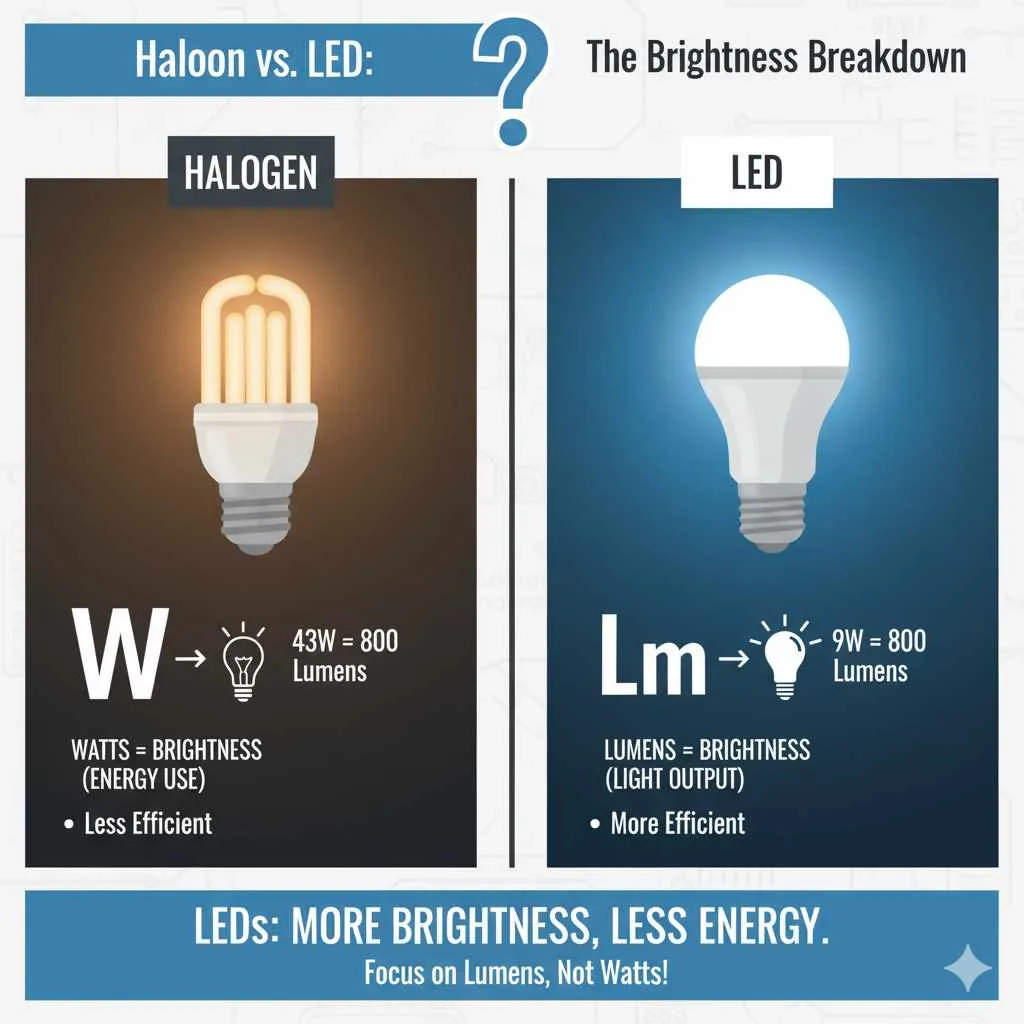
Let’s get straight to the heart of the matter: brightness. When we talk about how bright a light bulb is, we’re usually referring to its light output, measured in lumens. It’s easy to get tricked because we’re so used to the wattage of older bulbs – higher wattage meant brighter light. But with LEDs, it’s different. They use much less energy to produce the same amount of light, and often, even more light.
Think of it this way: a 60-watt incandescent bulb might produce around 800 lumens. A halogen bulb, being a slightly more efficient version of incandescent, might give you a similar brightness for slightly less wattage, say around 43 watts for 800 lumens. Now, an LED bulb that produces 800 lumens typically only uses about 9-10 watts! This is where the “genius” part of LEDs comes in – they deliver the brightness you need with a fraction of the energy.
So, to answer your question directly: No, halogen bulbs are not inherently brighter than LED bulbs. In fact, when comparing bulbs that produce the same amount of light (lumens), LEDs are significantly more energy-efficient and can even be designed to produce higher lumen outputs than typical halogen bulbs.
Understanding Lumens: The Real Measure of Brightness
To truly understand why LEDs are often perceived as brighter, or at least capable of being much brighter, we need to talk about lumens. Lumens are the standard unit of measurement for the total amount of visible light that a bulb emits. It’s the most accurate way to compare brightness between different types of bulbs.
Here’s a simple guide:
- Low Lumens (e.g., 100-400): Best for accent lighting, nightlights, or creating a cozy ambiance.
- Medium Lumens (e.g., 450-800): Ideal for general room lighting in bedrooms, living rooms, or dining areas. This is where many common household bulbs fall.
- High Lumens (e.g., 850-1500+): Great for kitchens, bathrooms, workspaces, or anywhere you need bright, clear light for tasks.
When you’re shopping for new bulbs, look for the lumen number on the packaging instead of just the wattage. This will give you a true comparison of brightness, no matter the bulb technology.
A Look at Bulb Technologies: How They Produce Light
The way bulbs create light is vastly different, and this impacts their brightness, efficiency, and lifespan.
Incandescent Bulbs (The Originals)
These are the classic bulbs many of us grew up with. They work by heating a thin wire filament (usually tungsten) inside a glass bulb until it glows. They produce a warm, familiar light but are extremely inefficient, with most of the energy lost as heat. They have a very short lifespan.
Halogen Bulbs (The Upgrade)
Halogen bulbs are a type of incandescent bulb. They contain a small amount of halogen gas (like iodine or bromine) and have a tougher filament. This gas allows the filament to burn hotter and brighter, and importantly, it helps to redeposit evaporated tungsten back onto the filament, extending the bulb’s life compared to standard incandescents. They produce a whiter and brighter light than traditional incandescents but are still very inefficient and get quite hot.
LED Bulbs (The Future is Bright!)
LED stands for Light Emitting Diode. These bulbs are completely different. They use semiconductors to emit light when an electric current passes through them. They are incredibly efficient, producing very little heat as a byproduct. Because they are so efficient, LEDs can be designed to produce a wide range of brightness levels, from dim to incredibly bright, all while using much less energy than halogens.
Brightness Comparison Table: Halogen vs. LED
To make it super clear, let’s look at how these bulb types compare in terms of brightness and efficiency:
| Bulb Type | Typical Wattage (for ~800 Lumens) | Approximate Lumens per Watt | Lifespan (Hours) | Heat Output |
|---|---|---|---|---|
| Incandescent | 60W | ~13 | 1,000 | Very High |
| Halogen | 43W | ~18 | 2,000 | High |
| LED | 9-10W | ~80-100+ | 15,000 – 50,000+ | Very Low |
As you can see from the table, for roughly the same amount of light (800 lumens), an LED bulb uses a fraction of the energy and lasts much, much longer. This is why, even if a halogen seems bright, an LED can achieve that same brightness (or more) with incredible efficiency.
Beyond Brightness: The Genius of LEDs
It’s not just about lumens. LEDs offer a whole host of advantages that make them the clear winner for modern homes. Let’s explore why they are such a smart choice:
- Energy Efficiency: This is the big one! LEDs use up to 80% less energy than halogen bulbs to produce the same light. This translates to significant savings on your electricity bill. The U.S. Department of Energy highlights how much this can impact home energy consumption.
- Incredible Lifespan: LEDs last dramatically longer – anywhere from 15,000 to 50,000 hours, sometimes even more! This means you’ll be changing bulbs far less often, saving you time and money on replacements.
- Durability: Unlike fragile glass incandescent and halogen bulbs, LEDs have no filament to break and are typically made from durable plastic. This makes them more resistant to shock and vibration, perfect for active households.
- Instant On: LEDs reach their full brightness immediately when you flip the switch. No more waiting for a dim bulb to warm up!
- Color Options: LEDs come in a huge range of color temperatures, from warm, cozy yellow light (like traditional bulbs) to cool, crisp white light. You can choose the perfect ambiance for any room.
- Dimmability: Many LED bulbs are dimmable, offering the same flexibility as older bulbs. Just make sure to check the packaging for dimmable compatibility and use a compatible dimmer switch.
- Directional Light: LEDs can be designed to emit light in a specific direction, which is great for spotlights, task lighting, and reducing light wasted upwards.
- Reduced Heat: Because LEDs produce so little heat, they are safer to use in enclosed fixtures and don’t contribute as much to heating up a room, which can be a bonus in warmer climates or during summer months.
Are Halogen Bulbs Ever Brighter? The Nuance
It’s important to be entirely accurate. While LEDs can be significantly brighter, there are specific, high-performance halogen bulbs designed for certain applications where immense brightness in a small package is needed, like some automotive headlights or specialized spotlights. These might have higher lumen outputs than your average household LED bulb found at the grocery store or hardware shop. However, for general home lighting, the average halogen bulb is outshone by comparable LEDs in terms of both brightness and efficiency.
Consider the overall picture. When you buy a “100-watt equivalent” LED bulb, you are getting the brightness of a 100-watt incandescent (around 1600 lumens) while only using about 15-20 watts. A halogen bulb that produces 1600 lumens would realistically consume around 90-100 watts! So, in practice, for typical home use, LEDs offer a superior and more efficient brightness experience.
Choosing the Right Bulb for Your Home: A Simple Guide
Now that you know the difference, how do you pick the perfect bulb? Here’s a practical approach:
Step 1: Identify the Room and Its Purpose
- Living Room/Bedroom: Focus on warmth and comfort. Look for bulbs with a warm white color temperature (around 2700K) and suitable lumens for general lighting, perhaps 600-800 lumens. Dimmable LEDs are great here.
- Kitchen/Bathroom/Home Office: Bright, clear light is key for tasks. Opt for a cooler white or natural daylight color temperature (3500K-5000K) and higher lumen counts (800-1500+ lumens).
- Hallways/Closets: Basic illumination is usually enough. Standard warm white bulbs with 400-600 lumens are often sufficient.
- Accent Lighting/Reading Nooks: Use specialized bulbs (like smaller spotlights or decorative filament-style LEDs) that offer targeted light.
Step 2: Check the Lumens and Wattage Equivalent
Remember, lumens measure brightness. Wattage on LED packaging indicates the equivalent incandescent wattage to help you gauge brightness based on what you’re used to. For example, a 9W LED might say “60W Equivalent” and produce around 800 lumens.
Step 3: Consider Color Temperature (Kelvin – K)
- 2000K-3000K: Warm White. Cozy, inviting, similar to incandescent/halogen. Great for living rooms, bedrooms.
- 3000K-4000K: Cool White/Neutral White. Brighter, cleaner light. Good for kitchens, bathrooms, workspaces.
- 4500K-6500K: Daylight. Very bright, bluish-white light. Mimics natural daylight. Best for task lighting, garages, or rooms where you need maximum clarity.
It’s often recommended to check out guides on color temperature to find what suits your style best!
Step 4: Look for Dimmable Compatibility (If Needed)
If you have dimmer switches, always ensure your LED bulbs are marked as “dimmable.” Not all are, and using non-dimmable ones can cause flickering or bulb damage.
The Environmental Impact: Why LEDs Shine
Beyond cost savings, choosing LEDs is also a win for the planet. Their incredible energy efficiency means they consume less electricity, reducing the demand on power plants, which in turn lowers greenhouse gas emissions.
Furthermore, their exceptionally long lifespan means fewer bulbs end up in landfills. Halogen and incandescent bulbs often contain small amounts of metal filaments that can be harmful, and their frequent replacement contributes to waste. While it’s important to recycle electronics responsibly, the sheer reduction in consumption with LEDs makes a noticeable environmental difference.
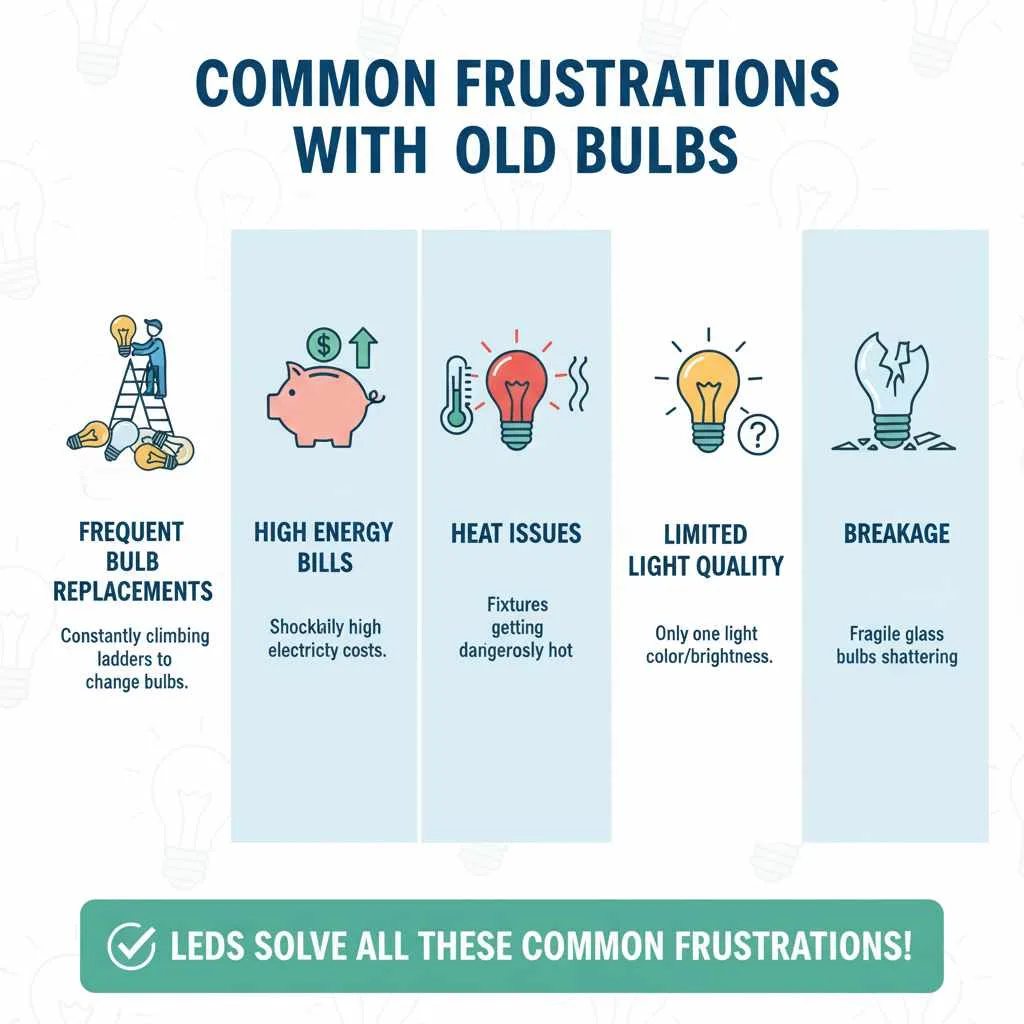
Common Frustrations with Old Bulbs
Before LEDs became so accessible and affordable, many homeowners and renters put up with:
- Frequent Bulb Replacements: Constantly having to climb ladders to change burnt-out bulbs.
- High Energy Bills: Shockingly high electricity costs, partly due to inefficient lighting.
- Heat Issues: Light fixtures getting dangerously hot, especially in enclosed ceiling lights.
- Limited Light Quality Options: Only one type of light color and brightness for all situations.
- Breakage: Fragile glass bulbs shattering if dropped.
LEDs effectively solve all these common frustrations!
Frequently Asked Questions (FAQs)
Q1: Are halogen bulbs brighter than LED bulbs in terms of watts?
No, this is a common misconception. Watts measure energy consumption, not brightness. Brightness is measured in lumens. For the same amount of light (lumens), LEDs use far fewer watts than halogen bulbs.
Q2: Can I replace my halogen bulbs with LED bulbs directly?
In most standard fixtures (like screw-in E26/E27 bases), yes, you can directly replace halogen bulbs with LED bulbs of the same base type. Always check the bulb type and size to ensure compatibility. For specialty or low-voltage fixtures (like GU10 or MR16 halogens), ensure you purchase LED replacements with the correct base and that your existing transformer is compatible, especially for low-voltage systems.
Q3: Is the light from halogen bulbs better for my eyes than LED?
This is a complex question. Halogen bulbs produce a warm, familiar light that many find comfortable. However, LEDs offer a wide spectrum of color temperatures, including very warm options that mimic halogen light. High-quality LEDs are designed to reduce flicker and glare, which can cause eye strain. So, it’s about choosing the right LED for your needs rather than one being inherently better than the other.
Q4: Do LED bulbs get hot?
LED bulbs themselves produce very little heat. The heat that is produced is typically managed by a heat sink on the base of the bulb, which can feel warm to the touch. However, they are significantly cooler than halogen or incandescent bulbs, which get very hot and can be a fire hazard or cause burns.
Q5: How long does an LED bulb actually last?
LED bulbs are known for their longevity. A typical LED bulb can last anywhere from 15,000 to 50,000 hours or more. If used for 3 hours a day, a 25,000-hour bulb could last over 20 years!
Q6: Can I put a brighter LED bulb in a fixture that used a lower-wattage halogen?
You should always check the maximum wattage rating for your light fixture. While LEDs use less wattage for the same brightness, it’s crucial not to exceed the fixture’s maximum wattage rating to prevent overheating and potential fire hazards. However, you can usually opt for an LED bulb with a higher lumen output (brighter light) as long as the wattage is below the fixture’s limit and the bulb fits physically.
Conclusion: Shine Brighter with Smarter Lighting
So, to wrap it all up, are halogen bulbs brighter than LED? The definitive answer is no. While halogen bulbs have served us well and offer a pleasant, warm light, LED technology has surpassed them in almost every way. LEDs provide superior brightness efficiency, unparalleled longevity, and incredible versatility in color and application, all while saving you money and being kinder to our planet.
Making the switch to LED lighting is one of the simplest yet most impactful upgrades you can make to your home decor. It enhances your living spaces with better light quality, reduces your energy bills, and minimizes maintenance. You can confidently choose LED bulbs, knowing you’re not only matching or exceeding the brightness of your old halogens but also embracing a more sustainable, cost-effective, and enjoyable lighting experience. Embrace the genius of LED and let your home shine!