
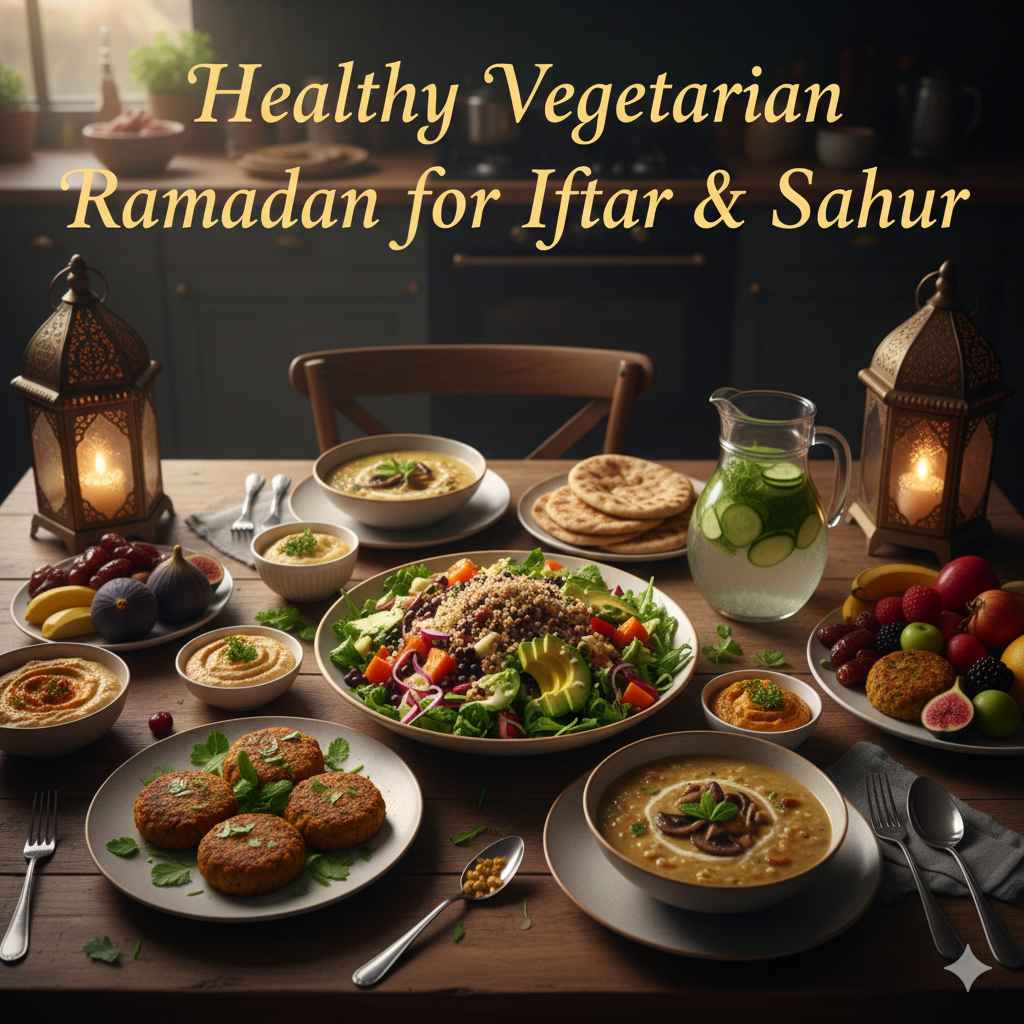
Finding delicious and nutritious recipes during Ramadan, especially for those who enjoy vegetarian meals, can seem like a challenge. You want food that is flavorful, filling, and easy to prepare after a day of fasting. The good news is, creating Healthy Vegetarian Ramadan Recipes for Iftar & Sahur doesn’t have to be hard work! This guide will help you create delightful dishes. We’ll simplify the process with step-by-step instructions. Next, we will explore some options to make your Ramadan a delicious and healthy experience.
Embracing Nutritious Vegetarian Choices for Ramadan
Ramadan is a time of spiritual reflection and community, and it also presents an opportunity to focus on healthful eating habits. For vegetarians, this can be particularly exciting, as there is a wide range of plant-based foods to explore and enjoy. From vibrant vegetables and fruits to filling grains and legumes, the possibilities for creating satisfying and nourishing meals are endless.
Focusing on balanced meals during Iftar and Sahur is vital for maintaining energy levels and well-being throughout the fasting period. The information below will assist you with choosing the right ingredients and preparing meals.
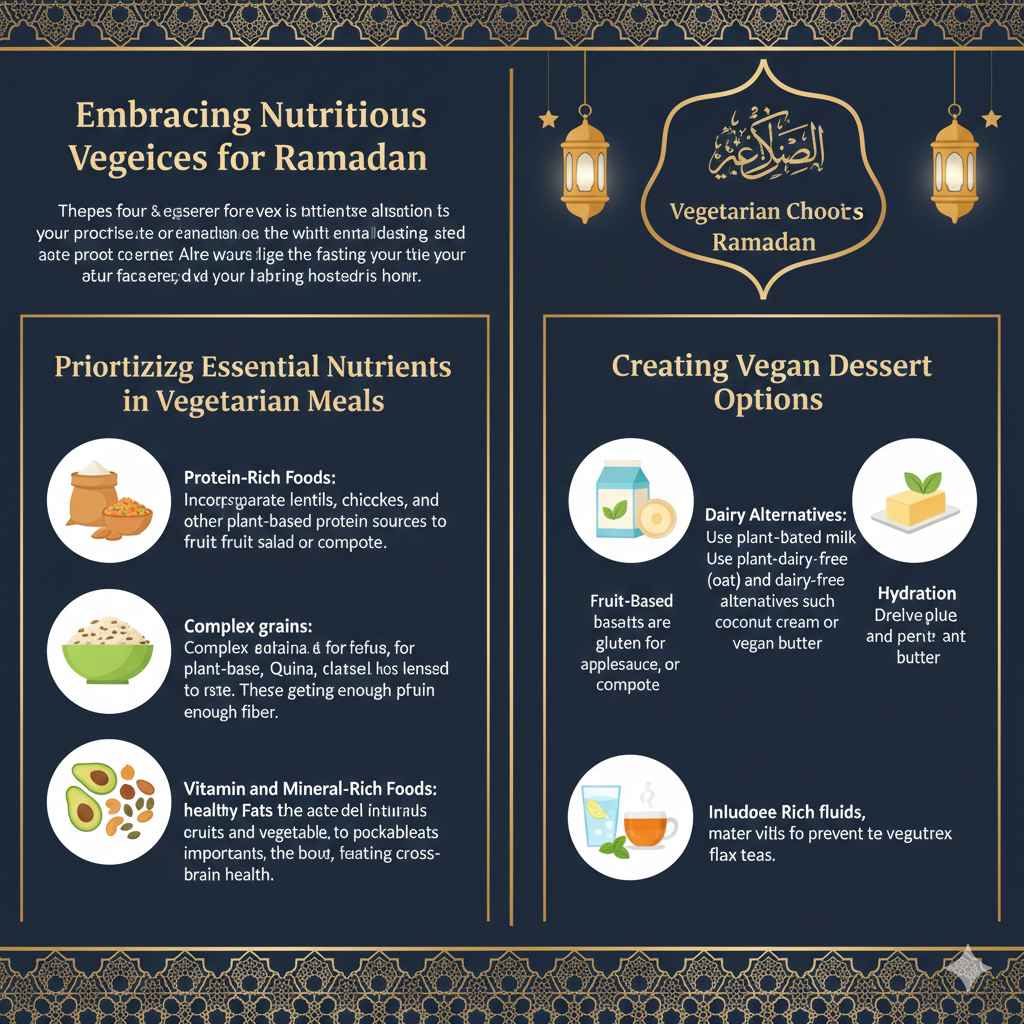
Prioritizing Essential Nutrients in Vegetarian Meals
When planning vegetarian meals for Ramadan, it’s essential to consider all the nutrients the body needs. This includes protein, which can be found in sources like lentils, chickpeas, and tofu. Complex carbohydrates, such as whole grains and sweet potatoes, provide sustained energy.
Healthy fats from avocados, nuts, and seeds are also key for overall health. Furthermore, a variety of colorful fruits and vegetables deliver essential vitamins and minerals. The combination of these key nutrients will help you feel your best during the fasting hours.
- Protein-Rich Foods: Incorporate lentils, chickpeas, tofu, and other plant-based protein sources to ensure you’re getting enough protein. Protein helps keep you feeling full and supports muscle health.
- Plant-based protein is essential for vegetarians, and during Ramadan, it is even more important to help the body function at an optimal level. Protein deficiency can lead to fatigue and loss of muscle mass. Lentils, chickpeas, tofu, and other plant-based proteins help to make sure that the body gets the necessary nutrients.
- Complex Carbohydrates: Choose whole grains, such as brown rice and quinoa, for sustained energy release. These carbohydrates also offer fiber, which aids in digestion and helps to prevent hunger.
- Complex carbohydrates are a great way to regulate blood sugar levels, which is important during Ramadan. Whole grains provide a slow release of energy, which helps prevent energy crashes. They also help keep you full for longer. Sweet potatoes are another good choice, as they are a great source of fiber and vitamins.
- Healthy Fats: Include avocados, nuts, and seeds in your meals to support overall health. Healthy fats are important for brain function and can help you feel satisfied after eating.
- Healthy fats are another essential part of a balanced diet, providing your body with vital nutrients. They assist with nutrient absorption and also play a key role in brain health. Incorporate avocados, nuts, and seeds into your diet to ensure that you are getting enough of these beneficial fats.
- Vitamin and Mineral-Rich Foods: Make sure to eat plenty of colorful fruits and vegetables. These foods are packed with vitamins and minerals that are important for your body.
- Fruits and vegetables are packed with vitamins, minerals, and antioxidants, all of which are important for maintaining your health during Ramadan. They also help to prevent many diseases and improve your immune system. Try to include a variety of colors in your meals to ensure you’re getting a wide range of nutrients.
- Hydration: Drinking plenty of fluids, such as water and herbal teas, is vital to prevent dehydration, particularly during the fasting hours.
- Make sure that you are drinking enough water to keep your body properly hydrated. You can keep your body hydrated by drinking water, herbal teas, and other healthy drinks. Keeping your body hydrated helps maintain energy levels. Dehydration can lead to fatigue, headaches, and other health issues, so it is important to drink fluids.
Crafting Balanced Iftar Meals
Iftar, the meal that breaks the fast, is a time to refuel the body. It’s important to strike a balance between enjoying delicious food and providing essential nutrients. Start with dates and water to replenish energy levels and prepare the digestive system. Follow with a balanced meal that includes protein, complex carbohydrates, healthy fats, and plenty of vegetables. Focus on light and easily digestible foods to avoid feeling heavy or sluggish. This section will give you some choices and options to make a great meal.
- Dates and Water: Begin Iftar with dates and water or a hydrating beverage to quickly restore energy and hydrate the body. Dates are a natural source of sugars, providing an immediate energy boost.
- Dates and water are a traditional and practical way to break the fast during Ramadan. Dates provide a quick energy boost due to their natural sugars, and water helps rehydrate the body after a day of fasting. They also help to signal the body that it is time to eat, preparing the digestive system for the meal ahead.
- Soups: A light, warm soup, such as lentil or vegetable soup, can be a great starter, providing hydration and essential nutrients. Soups are often easy to digest, gently preparing the stomach for the main course.
- Soups are a great way to start Iftar, especially vegetable or lentil soups. They are generally easy to digest and provide essential nutrients to the body. Soups also add hydration, which is very important after a day of fasting. They provide a gentle transition into a meal and are satisfying without being heavy.
- Main Courses: Include a protein source, like chickpeas or tofu, along with whole grains (brown rice or quinoa) and a generous portion of vegetables. These components provide a balanced intake of protein, carbohydrates, and nutrients.
- For the main course, you can incorporate a variety of vegetarian options, such as tofu stir-fries, lentil curries, or vegetable-based pasta dishes. These meals should contain a source of plant-based protein, such as tofu or lentils, which helps with muscle repair and satiety.
- Vegetable Dishes: Ensure that your meal includes a variety of colorful vegetables, which are high in vitamins, minerals, and fiber. Roasted vegetables, salads, or vegetable stews are excellent choices.
- Vegetables are very important for a well-balanced diet. They provide vitamins, minerals, and fiber, all of which are important for your overall health and well-being. Try to include a variety of colorful vegetables in your meals, such as bell peppers, broccoli, spinach, and carrots. This will ensure that you are getting a wide range of nutrients. You can prepare these vegetables by roasting them, adding them to salads, or using them in stews.
- Portion Control: Be mindful of portion sizes to avoid overeating, which can lead to discomfort and disrupt sleep patterns. Eat slowly and savor each bite.
- Pay attention to your body’s signals and avoid overeating. Overeating can lead to stomach discomfort and disrupted sleep. It’s also wise to pace your eating and chew your food thoroughly to aid digestion. This approach aids in better nutrient absorption and aids in regulating energy levels throughout the evening.
Planning Energizing Sahur Meals
Sahur is the pre-dawn meal that fuels your body for the day of fasting. Planning a Sahur meal that provides sustained energy is key to staying active and alert throughout the day. The meal should be nourishing and should keep you full. Incorporate slow-digesting foods, such as whole grains, proteins, and healthy fats, to maintain energy levels. This section will guide you through some great options to start your day.
Building Sustained Energy with the Right Foods
The goal of Sahur is to prepare your body for the day ahead. This requires foods that release energy slowly, preventing hunger pangs and fatigue. Focus on complex carbohydrates, such as whole grains and starchy vegetables, that digest slowly and provide a steady stream of energy. Combining these with protein and healthy fats helps to keep you feeling satisfied. The meal’s composition should be based on your personal preferences and needs, but it should prioritize sustained energy release.
- Complex Carbohydrates: Include whole grains, such as oatmeal, whole-wheat bread, or quinoa, which provide sustained energy and fiber. These foods help to keep you full for a longer time, preventing hunger pangs later in the day.
- Choosing complex carbohydrates for Sahur is a great idea because they digest slowly. This means they release energy steadily throughout the day. This can help prevent energy crashes and keeps you feeling satisfied for longer. This may also aid in controlling blood sugar levels and reduce cravings.
- Protein-Rich Foods: Incorporate eggs, tofu, or plant-based protein powders to support muscle health and satiety. Protein helps to slow the absorption of carbohydrates, further assisting in maintaining stable energy levels.
- Adding protein to your Sahur meal can provide several benefits. Protein is essential for repairing and building muscle, which is especially important during fasting. Protein helps to increase satiety. This will help you feel fuller for longer. This may help with better weight management and will help to stabilize energy levels.
- Healthy Fats: Include sources like avocados, nuts, or seeds to provide sustained energy and help with nutrient absorption. Healthy fats contribute to a feeling of fullness.
- Healthy fats, such as those found in avocados, nuts, and seeds, are a good addition to your Sahur meals. They help to slow the absorption of nutrients, which will help to keep you feeling full for longer. They also provide essential fatty acids that are vital for brain health and overall well-being. Try adding a handful of nuts to your oatmeal or spreading avocado on whole-wheat toast for a balanced meal.
- Hydration: Drink plenty of water and other hydrating fluids, such as herbal teas, to stay hydrated throughout the day. This helps your body function optimally.
- Drinking enough fluids is critical during Sahur to prepare you for a long day of fasting. Water, herbal teas, and other non-caffeinated drinks are a great choice. Staying hydrated will help with bodily functions and assist in maintaining energy levels.
- Fiber-Rich Foods: Include fruits, vegetables, and whole grains to provide fiber, which aids in digestion and helps to prevent hunger. This can also help to prevent constipation.
- Fiber is an important addition to a Sahur meal. It helps keep you full and can also aid in healthy digestion. Adding high-fiber foods such as fruits, vegetables, and whole grains to your meal can help you feel fuller for longer and may aid in preventing constipation. This can also help regulate blood sugar levels, helping to sustain energy levels throughout the day.
Creating Quick and Easy Sahur Recipes
In the early hours, it’s essential to have easy-to-prepare and nutritious options for Sahur. Simple recipes that can be made quickly, without spending hours in the kitchen, are the best choice. This section provides a look at some fast and effective recipes. This will ensure you can eat and have time to focus on other important activities.
- Overnight Oats: Prepare overnight oats with rolled oats, milk or plant-based milk, chia seeds, and your favorite toppings. This is a convenient, ready-to-eat option.
- Overnight oats are an excellent option for Sahur as they’re simple to make and filled with fiber and nutrients. This recipe is easy to customize. The recipe includes rolled oats, milk, chia seeds, and any favorite toppings. The oats are soaked overnight, making them soft and easy to digest. They provide a steady release of energy throughout the day.
- Tofu Scramble with Whole-Wheat Toast: Make a quick tofu scramble with vegetables and spices, and serve it with whole-wheat toast. This offers a balanced combination of protein and carbohydrates.
- A tofu scramble with whole-wheat toast is a great, balanced meal for Sahur. Tofu offers a good protein source, which helps with satiety, and the whole-wheat toast provides sustained energy. You can add vegetables and spices to your liking. This recipe is easy to personalize and can be prepared in minutes.
- Smoothies: Blend fruits, vegetables, protein powder, and plant-based milk for a quick and nutritious smoothie. This provides a quick and easy way to get a variety of nutrients.
- Smoothies are another great option for Sahur. They are quick to prepare and can be tailored to meet your nutritional needs. Include fruits, vegetables, protein powder, and plant-based milk to make a well-rounded meal. This offers a convenient way to get a wide range of vitamins, minerals, and protein in one go.
- Whole-Grain Pancakes or Waffles: Make a batch of whole-grain pancakes or waffles ahead of time, and simply reheat them in the morning. These can be paired with fruit and nuts for a balanced meal.
- Making whole-grain pancakes or waffles is a great option, as it can be prepared ahead of time and reheated in the morning. This saves time and provides a delicious meal. These can be served with fruit and nuts, making it a balanced and nutritious Sahur option.
- Yogurt Parfaits: Layer yogurt (dairy or non-dairy), granola, and fruit for a quick, filling, and customizable option. This provides protein, fiber, and vitamins.
- Yogurt parfaits are a quick and nutritious option for Sahur. They are easy to personalize. Layer yogurt with granola and fruit for a balanced meal that provides protein, fiber, and vitamins. Yogurt parfaits are a satisfying choice that’s both tasty and easy to prepare, making them perfect for those early morning meals.
Delicious Vegetarian Recipes for Iftar and Sahur
Now, let’s explore some delicious and easy-to-prepare recipes specifically designed for Iftar and Sahur. These recipes are tailored to provide a mix of flavors and nutrients, ensuring you enjoy your meals while also supporting your health. Each recipe is designed with simplicity in mind, so they can be easily made without taking up too much time.
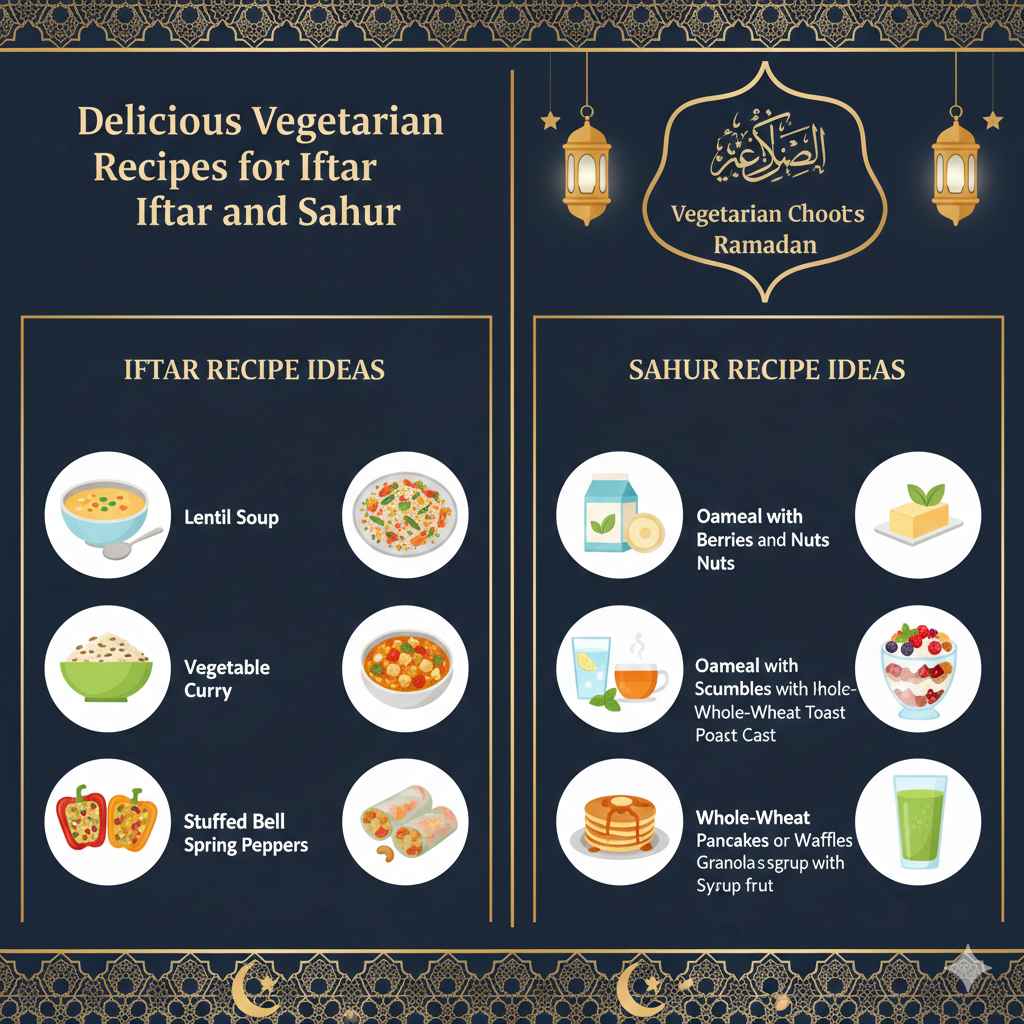
Iftar Recipe Ideas
Iftar presents the opportunity to break your fast with a meal that is both satisfying and packed with nutrition. The following recipes are designed to be enjoyed after a day of fasting. They offer a good variety of tastes and textures. Try these out to add more variety to your Iftar meals. There is something for everyone to try in this section!
- Lentil Soup: A classic, warming soup that’s packed with protein and fiber. Lentil soup is an excellent way to start Iftar.
- Lentil soup is a great option for Iftar due to its nutritional benefits. Lentils are a good source of protein and fiber, which helps keep you feeling full. The fiber aids digestion and provides essential nutrients. It is a hearty and satisfying soup that gently prepares your body for the main meal. The spices used in the soup can add warmth to your meal. You can customize the recipe to your liking. It is a versatile choice that is also tasty.
- Vegetable Biryani: A flavorful rice dish made with mixed vegetables, herbs, and spices. It offers a combination of carbs, fiber, and vitamins.
- Vegetable Biryani is a flavorful meal for Iftar, offering a combination of complex carbohydrates from rice and essential vitamins from the vegetables. This meal is both filling and satisfying. The mix of spices and herbs adds flavor. This dish is usually served with raita to make it even tastier. It is a wonderful dish that is also a satisfying meal.
- Chickpea Curry: A creamy and flavorful curry that can be served with rice or roti. It’s a great source of protein and complex carbohydrates.
- Chickpea curry is another satisfying meal for Iftar that offers a blend of protein, fiber, and complex carbohydrates. Chickpeas offer a substantial amount of protein, and the curry is filling. Serve it with rice or roti. The spices used in this meal also add a lot of flavor, making it a well-rounded and delightful dish.
- Stuffed Bell Peppers: Bell peppers stuffed with a mix of rice, vegetables, and herbs. These are baked or steamed until tender.
- Stuffed bell peppers are a visually appealing and delicious option for Iftar. You can fill bell peppers with a mix of rice, vegetables, and herbs. These are baked or steamed until tender. This dish offers a variety of nutrients and is a good source of fiber. This meal is also easy to personalize. It’s both flavorful and visually appealing, making it a great addition to your meal.
- Vegetable Spring Rolls: Fresh spring rolls filled with colorful vegetables, vermicelli noodles, and served with a dipping sauce. They provide a light yet satisfying start to your meal.
- Vegetable spring rolls are a light, tasty, and refreshing meal. Filled with colorful vegetables, vermicelli noodles, and served with a dipping sauce. They offer a good range of vitamins and fiber, and they are also a great option. Spring rolls are a great way to start your meal.
Sahur Recipe Ideas
Sahur meals should be easy to prepare and nutrient-rich to fuel your day. These recipes are designed to be quick and simple. They provide the right balance of nutrients to sustain your energy levels. These recipes will help you enjoy every bite.
- Oatmeal with Berries and Nuts: A classic and nutritious choice. This will keep you full for several hours.
- Oatmeal with berries and nuts is a nutritional and classic Sahur choice. This meal is simple to make and offers a blend of complex carbohydrates, fiber, and healthy fats. The addition of berries provides vitamins and antioxidants. Adding nuts will help in satiation. Oatmeal is a great choice that provides energy, keeping you full. It is a well-rounded start to your day.
- Tofu Scramble with Whole-Wheat Toast: A protein-packed meal. It will give you a good start to your day.
- Tofu scramble with whole-wheat toast is a great protein-packed meal for Sahur. Tofu is an excellent source of protein, which helps to maintain muscle health and promote satiety. Whole-wheat toast provides fiber and complex carbohydrates. You can also add some vegetables. It’s an easy and well-balanced option that will keep you feeling energized throughout the day.
- Yogurt Parfait with Granola and Fruit: Layers of yogurt, granola, and your favorite fruit. It’s quick, easy, and provides a mix of protein, fiber, and vitamins.
- Yogurt parfaits are a simple and nutritious choice for Sahur. They are quick to prepare and customizable to your taste. Layer yogurt, granola, and fruit to create a filling and tasty meal. It provides a good balance of protein, fiber, and vitamins. It’s a convenient and enjoyable option for the early morning.
- Whole-Wheat Pancakes or Waffles with Syrup and Fruit: A satisfying and enjoyable option to start your day.
- Whole-wheat pancakes or waffles offer a tasty and satisfying way to start your day. This provides a blend of carbohydrates, fiber, and nutrients, making it a hearty choice. Add syrup and your favorite fruit. This is a very customizable meal. It’s also simple to make. It offers a balanced and pleasurable breakfast for Sahur.
- Smoothie with Spinach, Banana, and Protein Powder: A quick and nutritious way to get a variety of vitamins and protein. It is easy to drink.
- A smoothie with spinach, banana, and protein powder is a quick and nutritious choice for Sahur. Smoothies are easy to blend. This provides a burst of energy to your day. You can add spinach for added vitamins and minerals. The addition of protein powder is helpful in keeping you full. It’s a convenient and tasty meal that is very easy to prepare, making it ideal for the early hours.
Tips for Healthy Vegetarian Eating during Ramadan
Maximizing the benefits of your Healthy Vegetarian Ramadan Recipes for Iftar & Sahur involves more than just selecting the right meals. Implementing certain eating habits and practices can enhance your well-being and help you make the most of this special time. This section will guide you through important things you should know. It will help you achieve your goals.
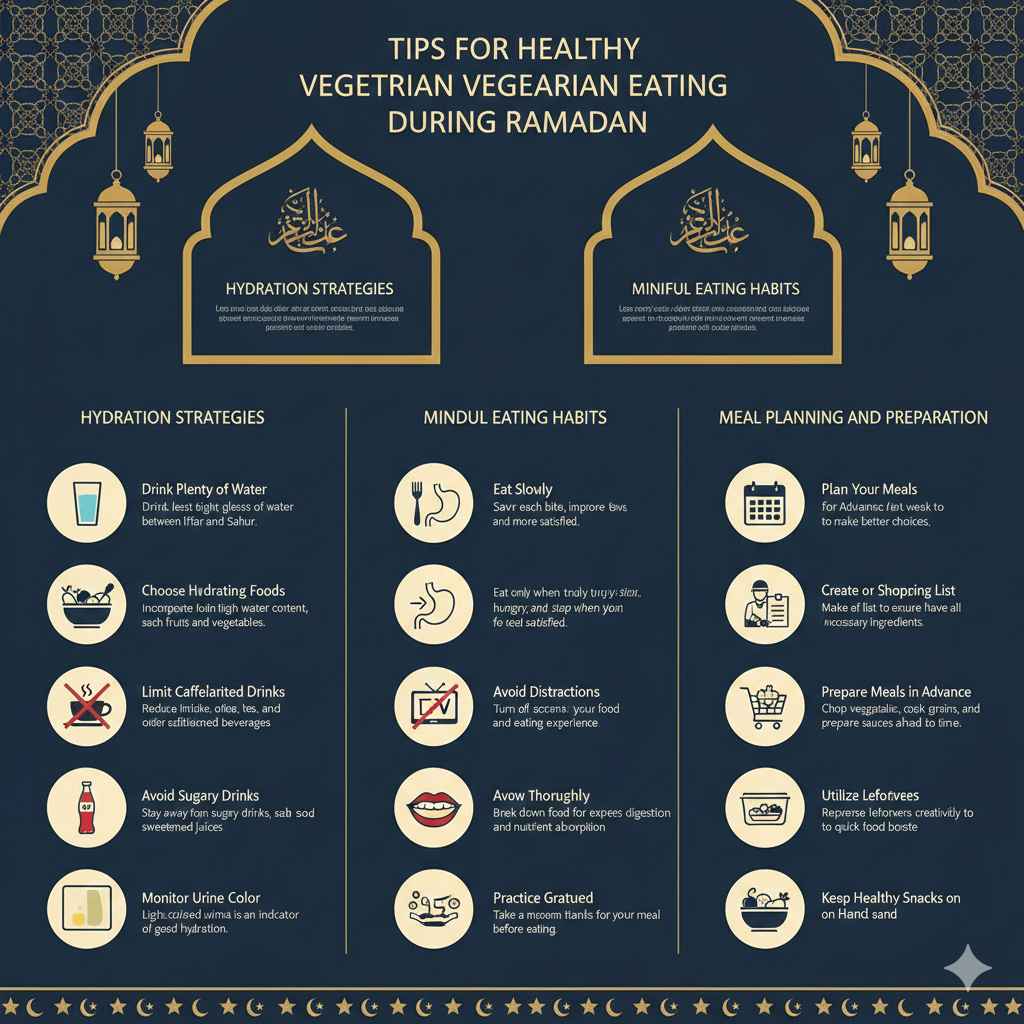
Hydration Strategies
Maintaining adequate hydration is very important during Ramadan. Dehydration can lead to fatigue, headaches, and other health issues. Proper hydration helps to keep the body’s systems functioning smoothly. It is important to know the right ways to keep your body hydrated.
- Drink Plenty of Water: Make it your priority to drink plenty of water between Iftar and Sahur. Try to consume at least eight glasses of water during this time.
- Make drinking enough water a priority, and you will stay hydrated. Drink at least eight glasses of water between Iftar and Sahur. You can spread this out over the evening and early morning. This is the simplest way to replenish fluids lost during the fast. Doing this will support all bodily functions and help you to feel your best during the day.
- Choose Hydrating Foods: Incorporate foods with high water content, such as fruits and vegetables, into your meals. These foods can help you stay hydrated, providing essential nutrients.
- Add water-rich foods, such as fruits and vegetables, to your meals. Fruits like watermelon, cucumber, and oranges can boost your hydration levels. Vegetables such as lettuce, tomatoes, and spinach will contribute to your water intake. Adding these foods to your diet can significantly contribute to your daily hydration needs.
- Limit Caffeinated Drinks: Reduce your intake of coffee, tea, and other caffeinated beverages. Caffeine can have a diuretic effect.
- Limit your caffeine intake to reduce the effect on your body. Caffeine can increase water loss. This can lead to dehydration. If you choose to drink coffee or tea, do so in moderation and balance it with water. You may also think about substituting them for herbal teas. They also offer hydration without the caffeine.
- Avoid Sugary Drinks: Stay away from sugary drinks, such as soda and sweetened juices. These can cause dehydration and provide empty calories.
- Avoid sugary drinks, as they can cause dehydration. These drinks may provide short-term energy, but they can be high in calories and offer little nutritional value. Opting for water, herbal teas, or naturally flavored water is a better way to stay hydrated and support your overall well-being. This will ensure you’re getting the right nutrients without unnecessary added sugars.
- Monitor Urine Color: Regularly check the color of your urine. Light-colored urine is usually an indicator of good hydration.
- You can check the color of your urine to monitor your hydration levels. It is a good indicator of how well hydrated you are. Light-colored urine is an indicator of healthy hydration. Dark-colored urine means you may need to increase your fluid intake. This simple check helps you keep a watch on your hydration levels and adjust your fluid intake accordingly.
Mindful Eating Habits
Mindful eating can greatly improve your Ramadan experience. It can improve your overall well-being. This approach involves paying attention to what and how you eat, promoting better digestion, and appreciating the meals. Here are some strategies to practice mindful eating.
- Eat Slowly: Make a conscious effort to eat slowly, savoring each bite of your food.
- Make sure to take your time to eat. This will help with the mindful eating practice. It allows your body to register fullness signals. Eating slowly can improve digestion. It allows you to feel more satisfied with smaller portions. It is also good to enjoy the flavors, textures, and aromas of your meals, making each eating experience more fulfilling.
- Pay Attention to Hunger Cues: Be aware of your hunger and fullness signals. Eat only when you are truly hungry, and stop when you feel satisfied, not overly full.
- Pay attention to your hunger signals so you can respond properly. You will be able to distinguish between genuine hunger and other emotions, such as boredom or stress. It also helps you to recognize when you are full. It is beneficial to stop eating when you’re satisfied instead of eating until you are overly full. This approach can help with digestion. It also helps to prevent overeating and promote a healthier relationship with food.
- Avoid Distractions: Minimize distractions during meals. Focus on the food and your experience. This promotes better digestion.
- To practice mindful eating, you must get rid of any distractions during your meals. Remove anything that may distract you from focusing on the eating experience. This includes turning off the television. By focusing on your food, you can pay more attention to the taste and textures of your meal. You can also listen to your body’s signals of hunger and fullness.
- Chew Thoroughly: Chew your food thoroughly before swallowing. Chewing is key to good digestion.
- Chewing food thoroughly has many benefits for your digestive system. Chewing breaks down the food into smaller pieces, making it easier to digest. Proper chewing also helps with nutrient absorption. It is also a key factor in mindful eating. It encourages you to slow down and focus on the food and eating experience.
- Practice Gratitude: Before eating, take a moment to express gratitude for the food. This enhances the dining experience.
- Make sure to take a moment to express your gratitude for the food before eating. Expressing your thanks is a good way to appreciate the meal you are about to enjoy. This practice can enhance your overall dining experience. It will also help improve your connection with the food and make your meal more satisfying. It is also a way to recognize and show appreciation for those who have provided the food.
Meal Planning and Preparation
Meal planning and preparation are very important for a successful and healthy Ramadan. This helps to make sure you have easy and nutritious meal choices. Planning can also help to avoid unhealthy eating habits. Here are some key tips for planning your meals.
- Plan Your Meals in Advance: Plan your meals for the week or a few days ahead. This helps you to make better choices and reduces impulse eating.
- Plan your meals ahead of time. This can improve your diet. Knowing what you will eat for Iftar and Sahur helps you make thoughtful choices. It will ensure that you have nutritious options prepared. This also helps with sticking to your health goals, as it helps you avoid making quick decisions and reduces the temptation of unhealthy foods.
- Create a Shopping List: Make a shopping list based on your meal plan. This ensures that you have all the necessary ingredients on hand.
- Creating a shopping list based on your meal plan is another step in being prepared. This will help you to gather all the ingredients you need. Having a list reduces the chances of buying food that you don’t need. It also will help in avoiding impulse buys and saves both time and money. It also makes sure that you always have fresh and nutritious ingredients available.
- Prepare Meals in Advance: Whenever possible, prepare parts of your meals in advance. Chop vegetables, cook grains, and prepare sauces.
- Meal preparation is a great way to save time and energy during Ramadan. Cook grains, chop vegetables, and prepare sauces ahead of time. This will help you to prepare quick and nutritious meals. This is especially helpful during the evenings. This is when time is often limited. Prepping meals helps to reduce the amount of time you have to spend in the kitchen. This also helps you stick to your diet.
- Utilize Leftovers: Plan to use leftovers creatively in your next meals. This helps to reduce food waste and save time.
- Use leftovers wisely and creatively. Leftover food is a time-saving technique. Turn leftovers into new meals. This will help you to reduce food waste. Using leftovers is an easy way to incorporate nutrients into your meals. Leftovers can be repurposed to make other dishes or as part of new meals. This can also prevent you from spending too much time in the kitchen.
- Keep Healthy Snacks on Hand: Have healthy snacks, such as fruits, nuts, or yogurt, available for when you need a quick energy boost.
- Have healthy snacks available to enjoy between Iftar and Sahur. Make sure to choose nutritious snacks. It can also help you resist the temptation of unhealthy snacks. It’s a way to keep your energy levels steady. Healthy snacks are a great way to bridge the gap between meals. Having these snacks is a convenient way to stay on track with your eating plan.
Frequently Asked Questions
Question: What are the best ways to stay energized throughout the day while fasting?
Answer: Focus on balanced Sahur meals including complex carbohydrates, protein, and healthy fats. Make sure you hydrate properly.
Question: How can I make sure I am getting all the essential nutrients in my diet?
Answer: Incorporate a variety of foods, including plenty of fruits, vegetables, whole grains, and plant-based protein sources, into your meals. Focus on a well-balanced diet.
Question: What are some simple and quick Sahur recipes?
Answer: Overnight oats, tofu scramble with whole-wheat toast, smoothies, and yogurt parfaits are great options for a quick and nutritious Sahur.
Question: How can I prevent overeating during Iftar?
Answer: Start with dates and water, eat slowly, and pay attention to your body’s hunger and fullness cues. Practice mindful eating habits.
Question: Is it okay to exercise during Ramadan?
Answer: Yes, but it is important to adjust your exercise routine. Exercise lightly during the day. Consider lower intensity workouts and focus on hydration and rest.
Final Thoughts
Planning and preparing Healthy Vegetarian Ramadan Recipes for Iftar & Sahur can transform your experience. By focusing on balanced meals, adequate hydration, and mindful eating, you can enjoy delicious, filling dishes while maintaining your energy and well-being. Start by trying a few of the recipes or tips mentioned in this guide. Gradually you can experiment with flavors and find what works best for you and your family. Remember, every small step you take towards healthy eating contributes to your overall health and well-being.
Embrace this opportunity to nourish your body and spirit during this time. Celebrate the joy of Ramadan with wholesome, delicious food that leaves you feeling satisfied. Enjoy the process and make this Ramadan the most flavorful and healthy one yet!